For growing eCommerce brands, fulfillment often becomes a competitive advantage—or the biggest operational risk. When logistics infrastructure can’t keep pace with growth, even a single disruption can threaten customer satisfaction, revenue, and long-term scalability.
That was the situation Roll Recovery faced.
After their warehouse was unexpectedly sold, the fitness recovery brand had to relocate more than 130 pallets of inventory, transition to a new fulfillment operation, integrate with Shopify, and continue shipping customer orders without interruption. There was no extended planning period or gradual migration. Every day mattered.
By partnering with TCB Global’s Orlando fulfillment center, Roll Recovery transformed what could have been a costly logistics crisis into a scalable fulfillment system built for future growth.
About Roll Recovery
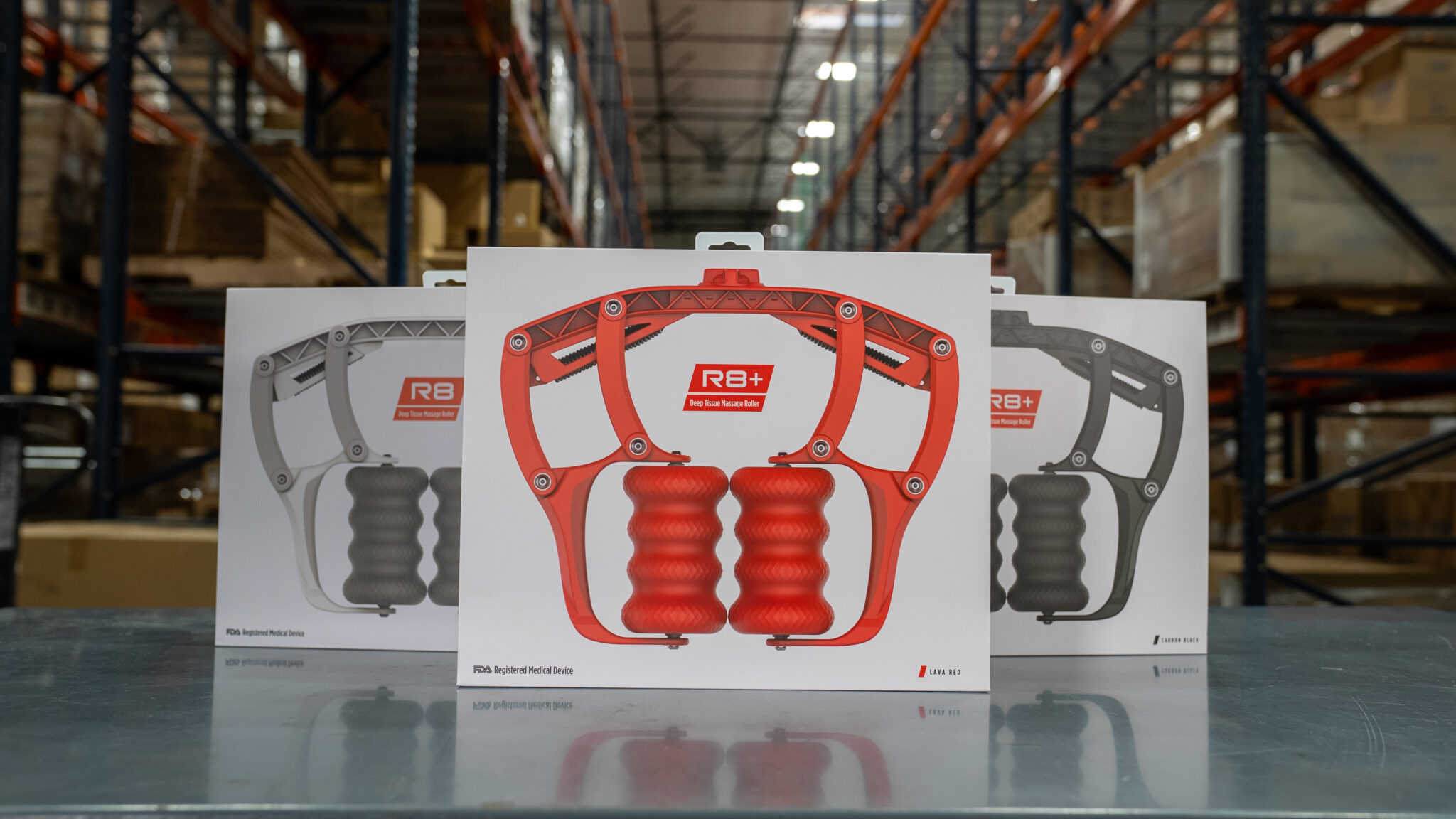
Roll Recovery is a leading brand in the fitness and recovery industry, offering products designed to improve mobility, athletic recovery, posture, and overall performance. Their product catalog includes:
- Recovery tools
- Massage rollers
- Footwear and posture products
- Recovery accessories
Like many rapidly growing direct-to-consumer brands, Roll Recovery sources inventory internationally while fulfilling orders directly to consumers throughout the United States.
As demand increased, so did operational complexity. Multiple product sizes, varying shipping requirements, seasonal demand spikes, and international inventory all placed additional pressure on an internal fulfillment operation that was becoming increasingly difficult to manage.
Then their warehouse was sold.
The Challenge: An Unexpected Warehouse Shutdown
Roll Recovery didn’t decide to outsource fulfillment because it was convenient.
They were forced into the decision.
The sale of their warehouse created an immediate deadline to relocate inventory and maintain daily operations simultaneously. There was no opportunity for a phased transition or lengthy implementation process.
At the time, the company was handling:
- Self-managed warehouse operations
- Daily direct-to-consumer fulfillment
- International inventory receiving
- Inventory management
- Shopify order processing
Everything had to continue operating while the entire logistics infrastructure changed underneath it.
The most urgent challenge involved relocating 130 pallets of inventory while ensuring every product remained available for customer orders.
The inventory needed to be:
- Removed from the existing warehouse
- Received into a new warehouse management system
- Counted and validated
- Organized for efficient fulfillment
- Connected to Shopify
- Ready to ship immediately
Meanwhile, customers continued placing orders.
Any delays, inventory discrepancies, or fulfillment errors would directly impact customer experience and brand reputation.
Hidden Operational Challenges
Although the warehouse sale created the urgency, it wasn’t the root cause of the company’s fulfillment challenges.
Like many growing eCommerce brands, Roll Recovery had begun experiencing the operational friction that naturally occurs when self-fulfillment reaches its limits.
Limited Inventory Visibility
Managing inventory internally often relies on manual processes or disconnected systems. As SKU counts and order volume increase, inventory accuracy becomes increasingly difficult to maintain.
Without complete visibility, inventory discrepancies become more common and purchasing decisions become more difficult.
Increasing SKU Complexity
A growing product catalog creates additional opportunities for:
- Mislabeling
- Incorrect product counts
- SKU inconsistencies
- Picking errors
Even small inaccuracies compound over time and eventually impact fulfillment performance.
Shipping Costs Continued to Rise
Without automated shipping logic, orders were frequently routed through default carrier selections instead of the most cost-effective shipping method.
The result included:
- Higher transportation costs
- Inconsistent delivery performance
- Missed opportunities for shipping optimization
No Scalable Fulfillment Infrastructure
Self-fulfillment can work extremely well during the early stages of growth.
However, once product lines expand and daily order volume increases, warehouse operations often begin consuming more time and resources than they should.
The warehouse sale simply accelerated a transition that was already becoming necessary.
Why Roll Recovery Chose TCB Global
Roll Recovery needed more than warehouse space.
They needed an experienced logistics partner capable of executing a live operational transition without disrupting customer fulfillment.
TCB Global’s Orlando fulfillment center provided exactly that.
The decision centered on several critical capabilities:
- Rapid onboarding
- Experience handling large inventory transfers
- Shopify integration expertise
- Direct-to-consumer fulfillment experience
- Structured transition planning
- Operational continuity throughout implementation
Rather than functioning as a traditional third-party logistics provider, TCB Global approached the transition as an extension of Roll Recovery’s business operations.
That difference proved essential.
The Solution: A Structured Fulfillment Transition
Successful warehouse transitions aren’t built on speed alone.
They’re built on precision.
TCB Global developed a structured onboarding process that prioritized inventory accuracy, operational continuity, and long-term scalability.
Comprehensive Inventory Validation
The first step involved receiving all 130 pallets into TCB Global’s Orlando fulfillment center.
Every SKU underwent a complete validation process that included:
- Physical inventory counts
- SKU verification
- Label confirmation
- Product description matching
- Inventory reconciliation
This process established a clean and accurate inventory foundation before fulfillment operations resumed.
Shopify Integration
Once inventory accuracy was confirmed, Roll Recovery’s Shopify store was integrated directly into TCB Global’s warehouse management system.
This enabled:
- Real-time order transmission
- Automatic inventory synchronization
- Improved inventory visibility
- Faster order processing
Orders could immediately flow from Shopify into warehouse operations without manual intervention.
SKU Organization and Data Correction
During inventory intake, TCB Global identified and corrected SKU inconsistencies that could have created future fulfillment errors.
Products were:
- Properly categorized
- Assigned accurate UPC information
- Organized for efficient warehouse picking
- Positioned for faster packing workflows
Correcting these issues during onboarding prevented downstream fulfillment problems before they occurred.
Shipping Optimization
Rather than applying one shipping method to every order, TCB Global implemented intelligent shipping logic based on product characteristics.
Smaller products were assigned cost-efficient parcel carriers.
Larger and heavier items were routed using carriers better suited for oversized shipments.
This approach improved delivery performance while reducing unnecessary shipping expenses.
Continuous Fulfillment Throughout the Transition
Perhaps the most important achievement was what customers never experienced.
Orders continued shipping throughout the entire warehouse transition.
TCB Global maintained operational continuity by ensuring:
- Daily order fulfillment remained active
- Backorders were minimized
- Customer delivery expectations were maintained
- Inventory remained available during onboarding
Instead of treating live fulfillment as an obstacle, TCB Global treated uninterrupted operations as a non-negotiable requirement.
Results
The warehouse transition accomplished far more than simply relocating inventory.
It fundamentally transformed Roll Recovery’s fulfillment operation.
Uninterrupted Customer Fulfillment
Despite relocating 130 pallets and implementing an entirely new logistics infrastructure, customer orders continued shipping without disruption.
Improved Inventory Accuracy
Structured inventory validation and warehouse management system integration provided significantly greater inventory visibility and control.
Lower Shipping Costs
Optimized carrier selection reduced unnecessary transportation expenses while improving delivery consistency.
Greater Operational Efficiency
By outsourcing fulfillment, Roll Recovery’s internal team could redirect valuable time toward product development, marketing, and business growth instead of warehouse operations.
Built for Scale
Most importantly, the company gained a fulfillment system capable of supporting future expansion rather than limiting it.
Frequently Asked Questions
When should a company switch to a 3PL?
Brands should consider transitioning to a third-party logistics provider when fulfillment begins limiting growth, inventory errors increase, shipping costs rise, or warehouse management consumes valuable internal resources.
How quickly can a 3PL transition happen?
The timeline depends on inventory volume and system complexity. However, experienced providers like TCB Global can execute rapid transitions through structured onboarding, inventory validation, and integrated warehouse management processes.
How can a fulfillment center reduce shipping costs?
Modern fulfillment centers optimize shipping by selecting carriers based on package dimensions, destination, weight, and service requirements instead of relying on a single default shipping method.
Why choose an Orlando fulfillment center?
An Orlando fulfillment center offers strategic access to Florida and the Southeast while providing efficient nationwide distribution through established transportation networks. For brands serving customers across the U.S., Orlando’s logistics infrastructure supports faster transit times and greater shipping flexibility.
Why Brands Trust TCB Global
Growing companies rarely need someone to simply store inventory.
They need a logistics partner that can adapt as their business evolves.
TCB Global supports brands through periods of transition, rapid growth, and increasing operational complexity by providing:
- Direct-to-consumer fulfillment
- Shopify fulfillment
- Amazon and retail distribution
- Wholesale order processing
- International inventory receiving
- Inventory planning and control
- Shipping optimization
- Multi-channel fulfillment
- Strategic warehouse locations in Orlando and Las Vegas
Rather than offering a one-size-fits-all fulfillment solution, TCB Global builds scalable logistics systems designed to grow alongside each client.
Ready to Build a Fulfillment Operation That Can Scale?
Roll Recovery didn’t plan to transition to a 3PL—they were forced into it. What could have become a costly operational disruption instead became the foundation for a more efficient, scalable fulfillment strategy.
If your business is struggling with rising order volume, increasing shipping costs, inventory challenges, or an upcoming warehouse transition, now is the time to evaluate whether your fulfillment operation is positioned for growth.
TCB Global’s Orlando fulfillment center is built to help brands navigate complex transitions without sacrificing customer experience. From inventory management and Shopify integration to shipping optimization and nationwide fulfillment, TCB Global delivers the infrastructure growing businesses need to scale with confidence.
Learn how TCB Global can simplify your fulfillment operations and support your next stage of growth by visiting: https://tcb3pl.com/services/fulfillment-center/