How a High-Volume Retail Brand Eliminated Chargebacks and Built a Precision Fulfillment System That Holds at Scale
Quick Answer: How Can Brands Eliminate Retail Chargebacks?
Retail chargebacks are most commonly caused by late shipments, incorrect orders, non-compliant labeling, and vendor requirement violations. The most effective way to eliminate chargebacks is by implementing structured retail fulfillment compliance processes that ensure every order meets retailer requirements before it ships.
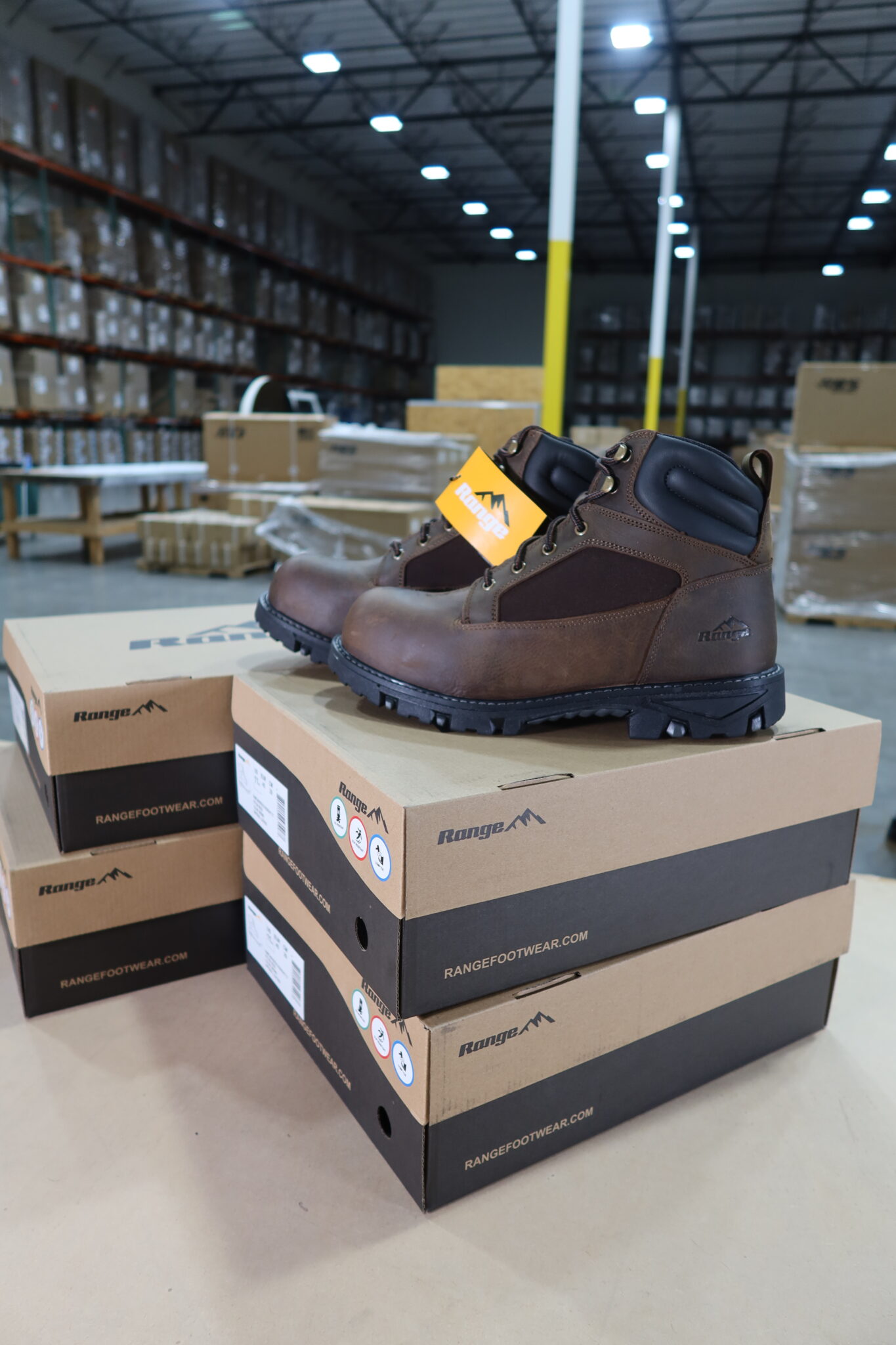
That was the challenge facing Miramar Range Footwear.
Despite already operating successfully within major retail channels, increasing order volume exposed weaknesses in fulfillment workflows, EDI processes, data accuracy, and operational visibility. Working with TCB Global, the company transformed its fulfillment operation into a scalable, compliance-driven system that eliminated chargebacks and improved control across the entire order lifecycle.
The Real Problem
Retail doesn’t give brands room to figure things out.
There is no margin for error. No buffer. No second chances.
You either meet retailer requirements exactly—or you pay for it.
That was the reality Miramar Range Footwear faced.
This wasn’t a new brand trying to enter retail. They were already operating at scale, fulfilling orders for established retail partners and processing hundreds of EDI transactions every week.
Demand wasn’t the problem.
The system supporting that demand was.
With weekly order volumes ranging from 250 to 400 EDI orders, small fulfillment issues quickly became expensive operational problems.
The consequences included:
- Delayed shipments
- Incorrect orders
- Non-compliant labeling
- Missed routing requirements
- Retail chargebacks
At this volume, every mistake carries a financial penalty.
As order flow increased, fulfillment consistency declined. Visibility into operations became limited. Cost transparency became unclear. Backlogs developed, and chargebacks began to accumulate.
For retail brands, these are warning signs that retail fulfillment compliance processes are no longer keeping pace with operational demands.
Client Snapshot
Industry: Retail Footwear
Miramar Range Footwear manages ongoing retail distribution through established retail partnerships and high-volume EDI order processing.
Operational Profile
- High-volume EDI order management
- Continuous retail distribution
- Strict vendor compliance requirements
- SKU-level inventory accuracy
- Consistent weekly order flow
- Multi-product retail fulfillment operations
Retail fulfillment at this level requires far more than basic warehousing.
It requires:
- Retail compliance expertise
- Accurate labeling and packaging
- Timely order processing
- Reliable inventory management
- Data integrity across every system
The company had already achieved scale.
The challenge was maintaining precision while operating at that scale.
What Was Actually Going Wrong?
The issue wasn’t capability.
The issue was structure.
Growing Backlogs
As fulfillment workflows became strained, orders began stacking up.
Backlogs create a chain reaction:
- Delayed shipments
- Increased operational pressure
- More manual intervention
- Higher error rates
The longer orders sit, the greater the risk of retailer penalties.
Inconsistent EDI Processes
EDI is the foundation of retail order communication.
Retailers require:
- Precise formatting
- Accurate data transmission
- Strict compliance standards
Without standardized workflows, inconsistencies begin before fulfillment even starts.
Data Integrity Issues
Every fulfillment process depends on accurate data.
When SKU information, product data, or inbound inventory records contain inaccuracies, fulfillment errors become inevitable.
Common outcomes included:
- Mis-picks
- Incorrect labeling
- Order discrepancies
- Compliance violations
Limited Operational Visibility
The company lacked real-time insight into:
- Order status
- Inventory levels
- Fulfillment performance
- Cost drivers
Without visibility, operations become reactive rather than proactive.
Unclear Cost Transparency
When operational data is fragmented, businesses struggle to understand:
- Where money is being lost
- Which processes are creating inefficiencies
- How chargebacks impact profitability
The result was more than operational frustration.
It was growing financial risk.
Chargebacks were simply the symptom.
The Turning Point
Miramar Range recognized that the problem could not be solved through small adjustments.
Retail fulfillment compliance requires precision at every stage.
The solution demanded a complete operational reset.
TCB Global approached the project with a focus on rebuilding the fulfillment system from the ground up.
The objectives were clear:
- Eliminate backlog
- Create structured EDI workflows
- Improve data integrity
- Standardize fulfillment execution
- Increase operational visibility
Because in retail distribution, consistency is not optional.
It is required.
How TCB Global Fixed It
Step 1: Eliminate the Backlog
Before improvements could be implemented, existing bottlenecks had to be removed.
Orders were processed, organized, and moved through the system to establish a clean operational baseline.
This immediately reduced fulfillment pressure and restored workflow stability.
Step 2: Build Structured EDI Workflows
TCB Global implemented standardized EDI processes designed to validate orders before fulfillment began.
This ensured:
- Complete and accurate order data
- Retailer compliance validation
- Reduced processing errors
- Improved order integrity
Compliance shifted from reactive correction to proactive prevention.
Orders were correct before leaving the warehouse.
Step 3: Fix Data Integrity at the Source
Rather than treating symptoms, TCB addressed the root cause.
Improvements included:
- SKU accuracy validation
- Product data alignment
- Inventory receiving controls
- Standardized inbound processes
By fixing inputs, fulfillment outputs became significantly more reliable.
Step 4: Standardize Fulfillment Execution
Consistent fulfillment requires consistent processes.
TCB established repeatable workflows that ensured:
- Accurate picking
- Correct packing
- Retail-compliant labeling
- Reliable order execution
The result was a fulfillment operation built on precision rather than individual intervention.
Step 5: Deliver Complete Operational Visibility
Visibility became a core component of the solution.
Miramar Range gained insight into:
- Order flow
- Inventory status
- Fulfillment performance
- Cost structures
The business could now make informed operational decisions based on real-time data.
The resulting framework aligned closely with TCB Global’s proven retail fulfillment compliance methodology, designed specifically to meet retailer requirements before orders leave the facility.
Results: What Actually Changed?
The improvements were immediate and measurable.
Backlog Eliminated
Orders flowed through the operation without delays or bottlenecks.
Chargebacks Eliminated
By embedding compliance directly into fulfillment workflows, retailer penalties were removed from the process.
Improved Order Accuracy
Orders consistently met retailer requirements.
Accuracy became predictable rather than dependent on manual intervention.
Consistent Fulfillment Performance
Defined processes produced repeatable results.
Every order followed the same proven workflow.
Greater Operational Visibility
The company gained clarity into:
- Costs
- Margins
- Inventory
- Performance metrics
Most importantly, the business moved from reacting to problems to controlling outcomes.
That shift created long-term operational stability.
Frequently Asked Questions
What causes chargebacks in retail fulfillment?
Retail chargebacks are typically caused by late shipments, incorrect orders, labeling mistakes, routing guide violations, and failure to meet retailer compliance standards.
How do you prevent retail chargebacks?
The most effective approach is implementing retail fulfillment compliance workflows that validate requirements before orders are shipped rather than correcting issues afterward.
What is EDI in retail fulfillment?
Electronic Data Interchange (EDI) is the system retailers and suppliers use to exchange order information electronically. Accuracy and compliance are critical because errors can disrupt fulfillment and trigger chargebacks.
Why is data integrity important in fulfillment?
Accurate SKU and product data directly affect picking, packing, labeling, and shipping accuracy. Poor data quality often leads to fulfillment errors and compliance failures.
When should a company fix its fulfillment system?
As soon as inconsistencies appear. Small fulfillment problems compound rapidly as order volume increases, creating larger operational and financial risks.
Why Brands Choose TCB Global
TCB Global specializes in building fulfillment systems where precision matters.
High-volume retail fulfillment requires:
- Accuracy
- Consistency
- Compliance
- Visibility
- Scalability
With strategically located operations in Orlando and Las Vegas, TCB Global supports national retail distribution while maintaining operational control and retailer compliance standards.
Core capabilities include:
- EDI fulfillment solutions
- Retail compliance management
- High-volume order processing
- Inventory control systems
- Scalable fulfillment infrastructure
TCB Global doesn’t simply fulfill orders.
They build systems designed to eliminate risk.
Supporting Growth at Scale
As brands grow, operational complexity grows with them.
TCB Global supports:
- Retail distribution
- Wholesale fulfillment
- Direct-to-consumer fulfillment
- Inventory planning
- Forecasting support
- Multi-channel logistics operations
The fulfillment infrastructure evolves alongside business growth, ensuring operational consistency even as volume increases.
Ready to Eliminate Chargebacks and Retail Fulfillment Risk?
If you’re dealing with chargebacks, compliance penalties, missed retailer requirements, or fulfillment inconsistencies, the issue is rarely isolated.
It’s usually a system problem.
Miramar Range Footwear didn’t simply improve fulfillment performance.
They eliminated the operational risks that were creating financial losses and limiting growth.
TCB Global helps retail brands build fulfillment systems engineered for accuracy, compliance, and scale.
Learn how our Retail Rollout and Store Launch Logistics Services support retailer compliance, large-scale distribution, and operational precision.
When retail success depends on flawless execution, the right fulfillment system makes all the difference.