Scaling a production-based business requires far more than increasing output. As demand grows, every stage of the supply chain—from production and inventory to fulfillment and freight—must work together seamlessly. Without a connected operational framework, growth often creates bottlenecks instead of opportunities.
That was the challenge facing Lazy T Ranch.
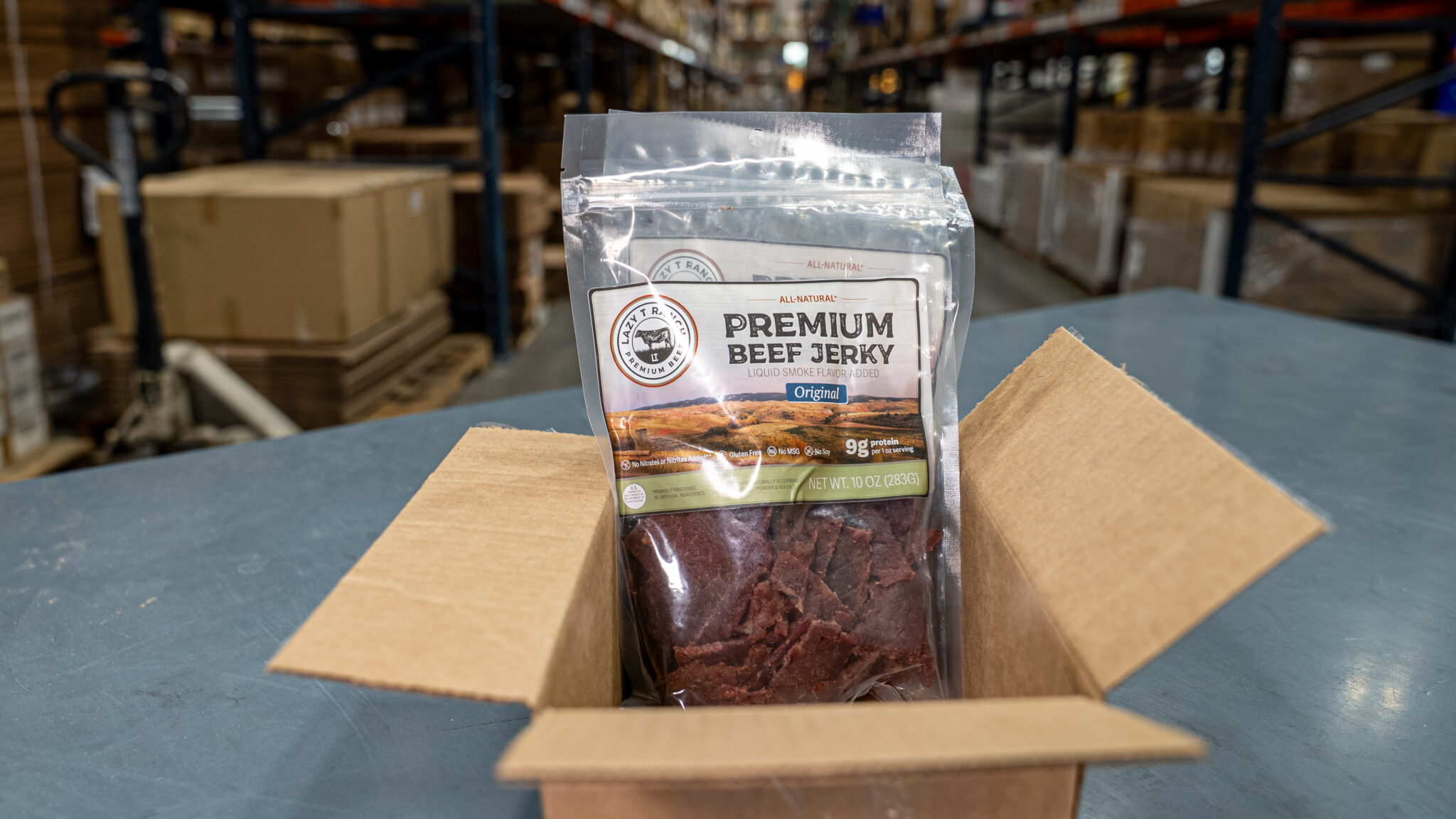
Built on generations of ranching expertise and direct access to high-quality beef, Lazy T Ranch had something many brands spend years trying to create: a reliable source of product and an authentic story rooted in agricultural heritage. However, moving from a successful ranching operation to a nationally scalable distribution business required more than exceptional products. It required a comprehensive Farm-to-Market Logistics & Distribution System capable of supporting long-term growth.
By partnering with TCB Global, Lazy T Ranch transformed fragmented operations into a unified supply chain designed to support direct-to-consumer fulfillment, retail expansion, wholesale distribution, and optimized freight management.
Client Overview
Lazy T Ranch operates within the food and agriculture industry, specializing in beef production and distribution.
Their business included several operational complexities common to modern food supply chains, including:
- Direct access to raw product
- Ongoing production cycles
- Cold chain logistics requirements
- Direct-to-consumer fulfillment
- Retail and wholesale distribution
- Multiple freight transportation methods
- Inventory management across various sales channels
Unlike many consumer brands that begin by sourcing products from third-party suppliers, Lazy T Ranch started at the source. That advantage created tremendous opportunity—but it also introduced operational complexity that required sophisticated coordination as demand increased.
The Challenge: Growth Was Outpacing Operational Structure
Having product is not the same as having a scalable business.
As Lazy T Ranch expanded into additional sales channels, operational processes began developing independently rather than as part of one coordinated system.
Production continued successfully.
Demand continued increasing.
Distribution opportunities expanded.
But the operational infrastructure connecting those components had not yet evolved.
The company wasn’t facing a product problem.
It was facing a systems problem.
As many agricultural businesses discover, transitioning from production-focused operations to market-facing distribution requires connecting every stage of the supply chain through an integrated Farm-to-Market Logistics & Distribution System.
Without that structure, growth introduces unnecessary complexity.
Operational Challenges
Several critical issues limited scalability.
Fragmented Supply Chain Operations
Production, inventory management, fulfillment, and transportation were functioning as separate activities rather than components of one coordinated operation.
Without centralized coordination, the business experienced:
- Inconsistent inventory movement
- Reactive fulfillment processes
- Limited synchronization between production and customer demand
- Reduced operational efficiency
Each stage performed its function, but the overall system lacked alignment.
Production and Fulfillment Were Not Fully Connected
Raw product movement, processing schedules, inventory availability, and outbound shipments all influence one another.
Without coordinated workflows:
- Product could remain in inventory longer than necessary.
- Fulfillment schedules became reactive.
- Inventory planning became increasingly difficult.
- Demand forecasting lost accuracy.
In food distribution, timing matters. Every delay creates additional pressure throughout the supply chain.
Multiple Sales Channels Increased Complexity
Lazy T Ranch served multiple customer segments, including:
- Direct-to-consumer customers
- Retail partners
- Wholesale buyers
Each channel has different fulfillment requirements, order profiles, shipping methods, and inventory demands.
Without a unified operating system:
- Inventory allocation became more complicated.
- Fulfillment priorities competed against one another.
- Execution varied between channels.
Freight Was Not Fully Optimized
Different shipment types require different transportation strategies.
Lazy T Ranch regularly managed:
- Bulk shipments
- Palletized freight
- Individual customer deliveries
Without coordinated freight planning, transportation costs increased while delivery schedules became more difficult to predict.
Limited Inventory Visibility
Decision-making becomes difficult when inventory cannot be monitored in real time.
Without centralized visibility, leadership had limited insight into:
- Current inventory levels
- Product location
- Product movement
- Available fulfillment capacity
Rather than operating proactively, teams were often forced to respond after issues developed.
Why Lazy T Ranch Chose TCB Global
Lazy T Ranch recognized that adding more vendors would not solve the underlying problem.
They needed an integrated logistics partner capable of designing a complete operational system.
TCB Global approached the project with one objective:
Create a connected Farm-to-Market Logistics & Distribution System that aligned production, inventory, fulfillment, transportation, and distribution into one coordinated operation.
Rather than optimizing isolated tasks, TCB Global focused on building an end-to-end logistics ecosystem capable of supporting sustainable national growth.
The Solution: Building a Unified Farm-to-Market Logistics & Distribution System
TCB Global implemented a structured operational framework designed to eliminate fragmentation throughout the supply chain.
End-to-End Supply Chain Mapping
The first step involved mapping every stage of product movement, including:
- Inbound beef transportation
- Processing timelines
- Inventory staging
- Warehousing
- Outbound fulfillment
- Final customer delivery
This provided complete visibility into how products moved from ranch to customer.
Production and Fulfillment Alignment
TCB Global developed workflows that connected production schedules directly with fulfillment requirements.
This alignment helped ensure:
- Inventory availability matched customer demand.
- Products moved efficiently into storage.
- Fulfillment teams received inventory when needed.
- Production schedules supported distribution goals.
Instead of separate departments operating independently, every stage became part of one coordinated workflow.
Multi-Channel Distribution Management
TCB Global structured operations to support all sales channels within a single system.
This included:
- Direct-to-consumer fulfillment
- Retail distribution
- Wholesale shipments
Managing every channel through one integrated platform reduced overlap, improved inventory utilization, and created more consistent execution.
Freight Optimization
Transportation strategies were developed for multiple shipment profiles, including:
- Palletized freight
- Bulk shipments
- Individual parcel deliveries
This improved:
- Transportation efficiency
- Delivery predictability
- Freight cost management
- Customer experience
Every shipping method became part of one coordinated logistics strategy rather than operating independently.
Inventory Visibility
TCB Global established centralized inventory visibility across the supply chain.
The team gained improved insight into:
- Inventory quantities
- Product locations
- Inventory movement
- Available stock for fulfillment
Better visibility enabled more informed planning while reducing uncertainty throughout operations.
Most importantly, every operational stage became connected through a unified Farm-to-Market Logistics & Distribution System instead of functioning as isolated processes.
Results
Following implementation, Lazy T Ranch established the operational foundation necessary for long-term expansion.
Key improvements included:
More Consistent Product Flow
Products moved more efficiently from production through final delivery.
Better Inventory Control
Improved inventory visibility supported stronger planning and operational decision-making.
More Efficient Fulfillment
Direct-to-consumer, retail, and wholesale orders operated within one coordinated fulfillment system.
Optimized Freight Operations
Transportation became more predictable while supporting multiple shipment types more efficiently.
Expanded Distribution Capability
The business strengthened its ability to support retail and wholesale growth without introducing unnecessary operational complexity.
Perhaps most importantly, Lazy T Ranch shifted from reacting to operational challenges toward proactively managing growth.
That transition creates the foundation necessary for sustainable expansion.
Frequently Asked Questions
What is a Farm-to-Market Logistics & Distribution System?
A Farm-to-Market Logistics & Distribution System connects production, inventory management, fulfillment, transportation, warehousing, and customer delivery into one coordinated operational framework. It helps agricultural and food businesses scale efficiently while maintaining product quality and operational visibility.
Why do legacy agricultural businesses struggle to scale?
Many established producers have reliable production capabilities but lack integrated logistics systems. As new sales channels emerge, disconnected operational processes often create inventory inefficiencies, fulfillment delays, and transportation challenges.
How can production and fulfillment stay aligned?
By integrating production schedules directly with inventory planning and customer demand, businesses can reduce delays, improve inventory availability, and create more efficient fulfillment operations.
Can one logistics system support direct-to-consumer, retail, and wholesale distribution?
Yes. A properly designed Farm-to-Market Logistics & Distribution System allows multiple sales channels to operate from one coordinated inventory and fulfillment infrastructure, reducing complexity while improving operational efficiency.
When should a business invest in a unified distribution system?
Before rapid growth creates operational inefficiencies. Building scalable infrastructure early helps businesses expand with greater control, visibility, and consistency.
Why Brands Choose TCB Global
Complex supply chains require more than transportation.
They require coordination.
TCB Global specializes in designing logistics systems that connect every stage of product movement for businesses operating in food production, agriculture, manufacturing, and multi-channel distribution.
With operations in Orlando, Florida, and Las Vegas, Nevada, TCB Global supports businesses across the United States through solutions including:
- Supply chain system design
- Farm-to-market logistics
- Food and agricultural logistics
- Direct-to-consumer fulfillment
- Retail and wholesale distribution
- Freight optimization
- Inventory visibility and planning
- Scalable warehouse operations
Rather than simply moving freight, TCB Global builds operational systems that help businesses scale with confidence.
Supporting Long-Term Growth
Growth should not create operational chaos.
A connected logistics system enables businesses to align production, inventory, fulfillment, freight, and customer demand while maintaining efficiency across every sales channel.
As organizations expand, the supply chain should evolve alongside the business—not become the obstacle preventing further growth.
Ready to Build a Scalable Supply Chain?
If your business has the products and the demand but your operations are struggling to keep pace, the challenge may not be growth—it may be the systems supporting that growth.
Lazy T Ranch didn’t simply expand distribution. They built the infrastructure necessary to support sustainable national growth through a unified Farm-to-Market Logistics & Distribution System.
If your organization is ready to improve inventory visibility, streamline fulfillment, optimize freight, and connect every stage of your supply chain into one scalable operation, TCB Global can help.
Learn how TCB Global’s Business Logistics Services can transform your operations and support long-term growth.
Whether you’re expanding into retail, wholesale, direct-to-consumer sales, or national distribution, TCB Global delivers the logistics infrastructure that turns operational complexity into scalable growth.