The beverage industry is evolving at an incredible pace.
New products are entering the market every day. Consumer preferences continue to shift toward healthier options, functional beverages, ready-to-drink products, and specialty drinks. At the same time, brands are expanding beyond traditional retail into direct-to-consumer (DTC) sales, wholesale distribution, Amazon, and other online marketplaces.
While growth presents exciting opportunities, it also introduces a challenge many beverage companies underestimate:
Beverage logistics is significantly more complex than standard product fulfillment.
Many beverage brands assume they can use the same fulfillment strategy as other eCommerce businesses, only to discover that rising shipping costs, inventory inaccuracies, damaged products, and retail compliance issues quickly erode margins.
At TCB Global, we’ve worked with beverage companies throughout Orlando, Las Vegas, and across the United States that share the same frustrations:
- Inventory doesn’t move efficiently.
- Shipping costs continue to increase.
- Retail orders become increasingly difficult to manage.
- Warehouse operations become reactive instead of strategic.
The problem isn’t demand.
The problem is that many logistics systems simply weren’t designed for the unique challenges of beverage distribution.
Why Beverage Logistics Is Different
Unlike many consumer products, beverages create operational complexity throughout the supply chain.
Products are often:
- Heavy
- Fragile
- Available in multiple package configurations
- Distributed through multiple sales channels
- Subject to shelf-life or expiration requirements
Each of these factors increases the level of precision required from a fulfillment provider.
Instead of simply storing products and shipping orders, beverage logistics requires coordinated inventory management, controlled warehouse handling, transportation planning, and retail compliance.
Without these capabilities, small operational issues quickly become expensive business problems.
The Biggest Challenges in Beverage Logistics
Complex Inventory Management
Inventory management is rarely straightforward for beverage brands.
A single product may exist in several different formats, including:
- Individual bottles or cans
- Four-packs
- Six-packs
- Twelve-packs
- Variety packs
- Retail display cases
- Pallet quantities
Every variation represents a unique SKU that must be accurately tracked throughout receiving, storage, fulfillment, and replenishment.
When inventory systems fail to distinguish between these configurations, common issues include:
- Incorrect inventory counts
- Stockouts
- Overselling
- Picking errors
- Delayed retail orders
Inventory accuracy isn’t simply about knowing how many products are available.
It’s about knowing exactly which configuration is available and where it’s located.
For growing beverage brands, that level of visibility is essential.
Product Weight Creates Higher Shipping Costs
Shipping beverages is expensive by nature.
Unlike lightweight apparel or consumer electronics, beverages generate higher transportation costs because of their weight.
Without strategic inventory placement, businesses often experience:
- Higher shipping zones
- Increased parcel expenses
- More frequent expedited shipments
- Reduced profit margins
Many companies focus solely on negotiating carrier rates.
However, transportation costs are also heavily influenced by warehouse location.
Strategically positioning inventory closer to customers significantly reduces both transit time and shipping expense.
This is one reason warehouse network design plays such a critical role in beverage logistics.
Fragility Requires Controlled Warehouse Handling
Many beverage products require careful handling throughout the fulfillment process.
Glass bottles can break.
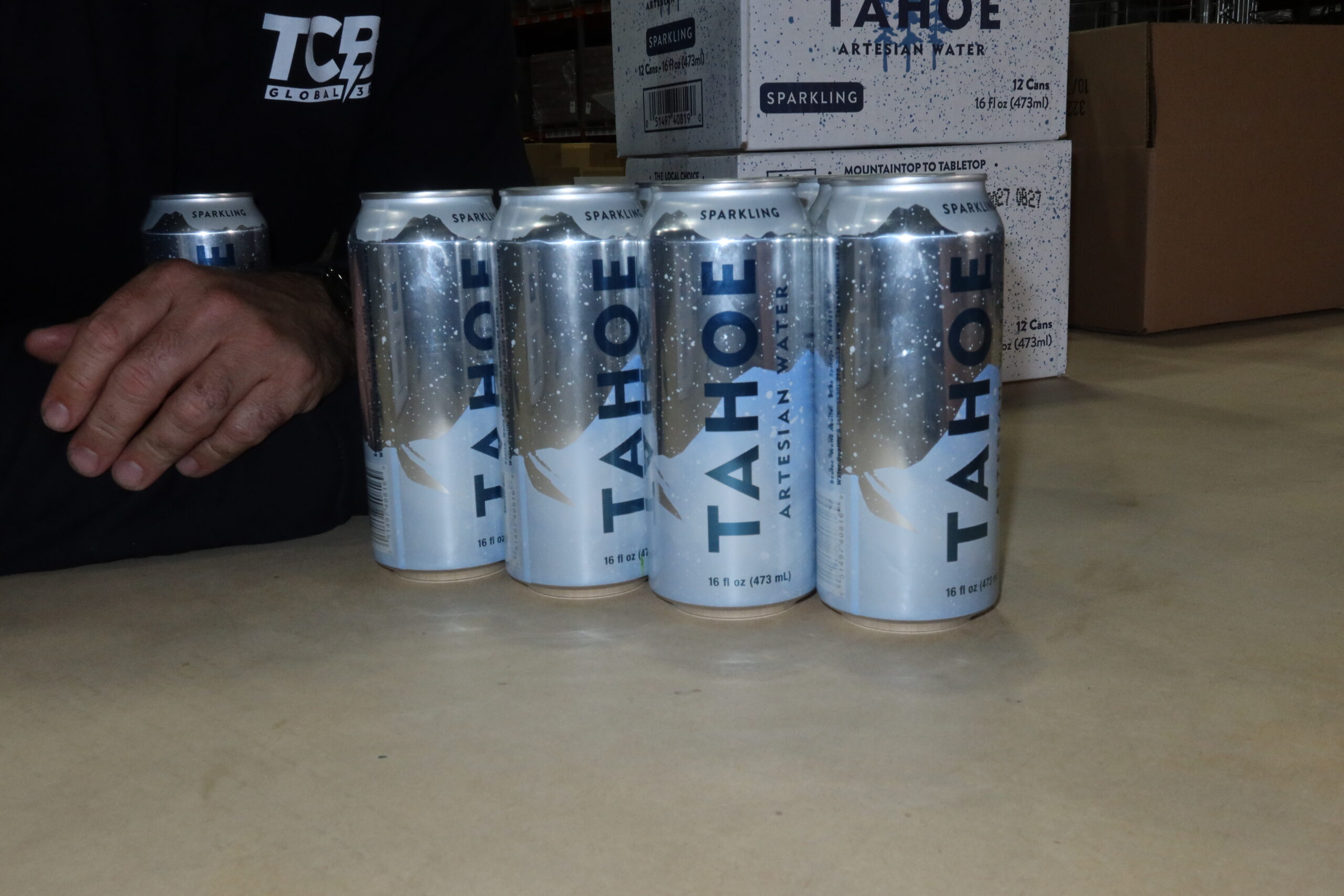
Aluminum cans can dent.
Labels and packaging can become damaged.
If receiving, storage, picking, and packing processes aren’t standardized, damage rates increase quickly.
The consequences extend beyond replacing inventory.
Damaged products often result in:
- Customer complaints
- Product returns
- Additional shipping costs
- Lost customer confidence
- Negative online reviews
A beverage fulfillment provider should prioritize consistent warehouse handling procedures that minimize unnecessary product movement and reduce opportunities for damage.
Retail Compliance Adds Another Layer of Complexity
Many beverage brands eventually expand into retail distribution.
While retail offers tremendous growth opportunities, it also introduces strict operational requirements.
Retailers expect suppliers to meet precise standards for:
- Product labeling
- Carton labeling
- Pallet configuration
- Advance shipment documentation
- Delivery appointments
- On-time performance
Failure to meet these requirements often results in retailer chargebacks.
These penalties reduce profitability while creating friction with valuable retail partners.
For growing beverage brands, retail compliance isn’t optional.
It must become part of the fulfillment process.
Multi-Channel Distribution Requires Operational Flexibility
Today’s beverage companies rarely sell through a single channel.
Instead, they simultaneously manage:
- Direct-to-consumer orders
- Wholesale accounts
- Retail distribution
- Marketplace fulfillment
- Subscription programs
Each sales channel has unique fulfillment requirements.
For example:
A consumer purchasing a six-pack online expects fast delivery and attractive packaging.
A wholesale distributor expects pallet quantities shipped according to purchase order requirements.
A national retailer expects strict compliance with vendor routing guides.
Managing these workflows through disconnected systems creates unnecessary complexity.
Modern beverage logistics requires one integrated fulfillment system capable of supporting every sales channel simultaneously.
Why Traditional 3PLs Often Struggle with Beverage Logistics
Many third-party logistics providers excel at general eCommerce fulfillment.
However, beverage distribution requires capabilities beyond traditional pick-and-pack operations.
Most general 3PLs are optimized for:
- Lightweight products
- Standard packaging
- Limited SKU variation
- Basic warehouse workflows
Beverage brands demand much more.
Successful beverage fulfillment depends on:
- Inventory precision
- Structured receiving processes
- Damage prevention
- Multi-channel coordination
- Retail compliance
- Strategic warehouse placement
Without these systems, fulfillment becomes increasingly difficult as order volume grows.
What works for apparel or consumer goods often doesn’t translate effectively to beverages.
What Modern Beverage Brands Should Expect from a 3PL
The right logistics partner should provide much more than warehouse space.
They should deliver a scalable operational system.
Inventory Accuracy at Scale
Every product variation must remain visible throughout the warehouse.
Accurate inventory data supports:
- Reliable fulfillment
- Better purchasing decisions
- Reduced stockouts
- Improved customer satisfaction
Controlled Warehouse Processes
Consistency should exist at every operational stage, including:
- Receiving
- Inventory storage
- Picking
- Packing
- Shipping
Well-defined warehouse procedures reduce errors while protecting product quality.
Multi-Channel Fulfillment
Rather than operating separate fulfillment systems for retail, wholesale, and eCommerce, brands benefit from one integrated solution.
An experienced logistics provider can coordinate inventory across every sales channel while maintaining visibility and accuracy.
Strategic Inventory Placement
Warehouse location directly influences transportation costs.
TCB Global strategically supports nationwide beverage distribution through fulfillment centers in:
- Orlando for East Coast distribution
- Las Vegas for West Coast fulfillment
This dual-location strategy reduces shipping zones, shortens delivery times, and improves overall transportation efficiency.
Instead of shipping every order across the country from one warehouse, inventory can be positioned closer to customers.
The result is lower shipping costs and faster delivery.
Retail-Ready Operations
Retail success depends on execution.
An experienced beverage logistics provider should ensure:
- Correct labeling
- Accurate pallet builds
- Compliance with retailer requirements
- On-time deliveries
- Reduced chargebacks
These operational details strengthen retailer relationships while protecting profitability.
The Business Benefits of Better Beverage Logistics
When beverage logistics are supported by structured systems, businesses experience improvements throughout the organization.
Inventory becomes more reliable.
Orders ship with greater consistency.
Damage rates decline.
Retail relationships improve.
Shipping expenses become more predictable.
Internal teams spend less time solving operational problems and more time focusing on growth.
Instead of reacting to fulfillment issues, leadership gains the confidence to expand into new products, new markets, and new distribution channels.
That operational stability becomes a competitive advantage.
Frequently Asked Questions
Why is beverage logistics more complex than standard fulfillment?
Beverage logistics involves heavier products, fragile packaging, multiple SKU configurations, retail compliance requirements, and multi-channel distribution. These factors require more advanced warehouse systems than traditional eCommerce fulfillment.
What causes most beverage logistics problems?
The most common issues include inaccurate inventory management, inconsistent warehouse handling, poor packaging processes, inefficient warehouse placement, and inadequate retail compliance procedures.
How can beverage brands reduce shipping costs?
Reducing shipping costs starts with strategic inventory placement. Positioning inventory closer to customers lowers shipping zones and transportation expenses. Packaging optimization and carrier selection also improve overall shipping efficiency.
Does TCB Global specialize in beverage logistics?
Yes. TCB Global supports beverage brands with scalable fulfillment solutions that include inventory accuracy, controlled warehouse handling, multi-channel fulfillment, retail distribution support, and strategic warehouse locations in Orlando and Las Vegas.
What should I look for in a beverage 3PL?
Look for a provider with experience managing complex SKU structures, proven inventory control systems, retail compliance expertise, structured warehouse processes, multi-channel fulfillment capabilities, and strategically located fulfillment centers.
Ready to Build a Smarter Beverage Logistics Strategy?
As your beverage brand grows, your logistics operation should become a competitive advantage—not a bottleneck. If you’re dealing with rising shipping costs, inventory challenges, retail compliance issues, or the complexity of managing multiple sales channels, now is the time to evaluate whether your distribution strategy is built to support long-term growth.
At TCB Global, we specialize in beverage distribution logistics designed specifically for the unique demands of the beverage industry. From inventory accuracy and controlled product handling to retail compliance, multi-channel fulfillment, and strategically located distribution centers in Orlando and Las Vegas, we help beverage brands streamline operations and scale with confidence.
Whether you’re shipping direct-to-consumer, supplying retail partners, or expanding your wholesale network, our experienced team can build a logistics solution tailored to your business.
Discover how TCB Global’s Beverage Distribution Logistics services can help reduce costs, improve efficiency, and support your next stage of growth. Visit: https://tcb3pl.com/services/beverage-distribution-logistics/