Landing a retail account is a major milestone for any beverage brand. It means greater visibility, larger order volumes, and access to new customers. Whether your products are hitting grocery store shelves, convenience stores, specialty retailers, or national chains, retail distribution creates tremendous opportunities for growth.
However, retail also introduces a challenge that catches many beverage brands by surprise: Beverage Retail Chargebacks.
At first, the deductions may seem insignificant, a few hundred dollars here, a few thousand dollars there.
But over time, those seemingly small penalties add up. Before long, a meaningful percentage of your revenue is disappearing—not because your products aren’t selling, but because your fulfillment operation isn’t consistently meeting retailer requirements.
At TCB Global, we’ve worked with beverage brands across Orlando, Las Vegas, and throughout the United States that have experienced this exact challenge. They’re growing successfully in retail, yet losing profitability because of avoidable operational issues.
The good news is that most beverage retail chargebacks are preventable.
They aren’t random, they’re the result of specific fulfillment processes that can be improved with the right systems, technology, and logistics expertise.
What Are Beverage Retail Chargebacks?
A retail chargeback is a financial deduction issued by a retailer when a supplier fails to comply with agreed-upon shipping, packaging, labeling, documentation, or delivery requirements.
Retailers establish detailed vendor compliance standards to keep their supply chains running efficiently. When shipments don’t meet those standards, the retailer often deducts fees directly from the supplier’s payment.
For beverage companies, these deductions can quickly become one of the largest hidden costs in the supply chain.
Unlike customer returns, chargebacks often occur even when the retailer accepts the shipment.
The products may still reach store shelves—but your margins shrink because the shipment failed to meet compliance expectations.
Why Beverage Logistics Creates More Chargeback Risk
Beverage logistics is significantly more complex than traditional eCommerce fulfillment.
Products are:
- Heavy
- Fragile
- Available in multiple package configurations
- Shipped through multiple distribution channels
- Subject to strict retail compliance standards
These characteristics create more opportunities for operational mistakes.
Retailers expect every shipment to meet precise specifications, including:
- Accurate product labeling
- Proper pallet configurations
- Complete documentation
- Scheduled delivery appointments
- Consistent packaging quality
Unlike direct-to-consumer fulfillment, retail distribution leaves very little room for error.
Even minor compliance issues can result in financial penalties.
The Most Common Causes of Beverage Retail Chargebacks
Many companies believe chargebacks are simply part of doing business.
In reality, they almost always stem from operational gaps that can be identified and corrected.
Incorrect Product Labeling
Proper labeling is one of the most common reasons retailers issue chargebacks.
Retail partners typically require standardized labels that include specific product information, barcode placement, carton identifiers, and shipping labels.
Chargebacks frequently occur when labels are:
- Missing
- Incorrect
- Applied in the wrong location
- Inconsistent with retailer requirements
Even if the shipment arrives on time, labeling errors often trigger automatic deductions.
Standardized labeling processes are essential for maintaining compliance.
Improper Pallet Configuration
Retailers rely on consistent pallet configurations to improve warehouse efficiency and reduce product damage.
Many retailers specify exact requirements for:
- Stacking patterns
- Case quantities
- Pallet height
- Stretch wrapping
- Product orientation
If pallets don’t meet these standards, retailers must spend additional labor correcting the shipment.
Those additional costs are often passed back to suppliers through chargebacks.
Proper pallet construction isn’t simply about warehouse efficiency.
It’s about protecting profitability.
Missed Delivery Windows
Timing is critical in retail logistics.
Retailers carefully schedule inbound shipments to support warehouse staffing, inventory planning, and store replenishment.
Arriving outside the scheduled delivery window—even with a perfect shipment—may result in financial penalties.
Common issues include shipments that arrive:
- Too early
- Too late
- Without proper appointment scheduling
Reliable transportation planning and warehouse coordination significantly reduce these risks.
Documentation and ASN Errors
Retail compliance depends on accurate documentation.
One of the most important requirements is the Advanced Shipping Notice (ASN).
ASNs communicate shipment details before products arrive at the retailer’s distribution center.
If the ASN doesn’t match the actual shipment, problems quickly develop.
Common documentation issues include:
- Incorrect quantities
- Missing shipment information
- SKU discrepancies
- Documentation mismatches
These errors create confusion during receiving and frequently result in chargebacks.
Product Damage During Transit
Beverages present unique transportation challenges.
Glass bottles can break.
Cans can dent.
Packaging can shift during transportation.
Without consistent warehouse handling and appropriate packaging, products may arrive damaged.
Retailers generally will not absorb these losses.
Instead, damaged shipments often lead to deductions, rejected deliveries, or replacement requests.
Damage prevention begins long before products leave the warehouse.
Why Chargebacks Increase as Beverage Brands Grow
During the early stages of growth, many beverage companies manage retail shipments manually.
Warehouse teams perform additional inspections.
Managers review paperwork personally.
Problems are identified before shipments leave the facility.
However, growth changes everything.
As order volume increases:
- More purchase orders must be processed.
- More shipments leave the warehouse.
- More retailer requirements must be managed.
- More opportunities for human error develop.
Without standardized systems, compliance becomes increasingly difficult to maintain.
A process that worked for 20 shipments each week often struggles with 200.
The result is predictable.
Chargebacks increase alongside order volume.
Why Many 3PL Providers Struggle with Retail Compliance
Most third-party logistics providers were built to support direct-to-consumer fulfillment.
Their operations are optimized for:
- Individual parcel shipments
- Flexible packaging
- Simple inventory management
- Standard warehouse workflows
Retail distribution demands a different operational mindset.
Successful retail fulfillment requires:
- Precise execution
- Standardized warehouse procedures
- Compliance-driven workflows
- Consistent quality control
- Accurate documentation
Without these systems, retailers begin identifying errors long before suppliers recognize a problem.
What Successful Beverage Brands Do Differently
Companies that consistently reduce chargebacks share one common characteristic:
They treat retail fulfillment as a controlled operational system—not a series of warehouse tasks.
Rather than relying on individual employees to remember retailer requirements, successful brands create repeatable processes that build compliance into every shipment.
This includes:
- Documented warehouse procedures
- Standardized labeling protocols
- Pallet verification processes
- Inventory validation
- Shipping quality control
- Technology that supports compliance
Consistency—not speed alone—protects margins.
How TCB Global Helps Beverage Brands Reduce Retail Chargebacks
At TCB Global, we understand that successful beverage logistics depends on operational discipline.
Every stage of fulfillment is designed to reduce compliance errors before shipments leave the warehouse.
Standardized Labeling Procedures
Every shipment is verified to ensure labels meet retailer specifications.
By eliminating inconsistencies before shipping, we help reduce one of the most common causes of retail deductions.
Controlled Pallet Configuration
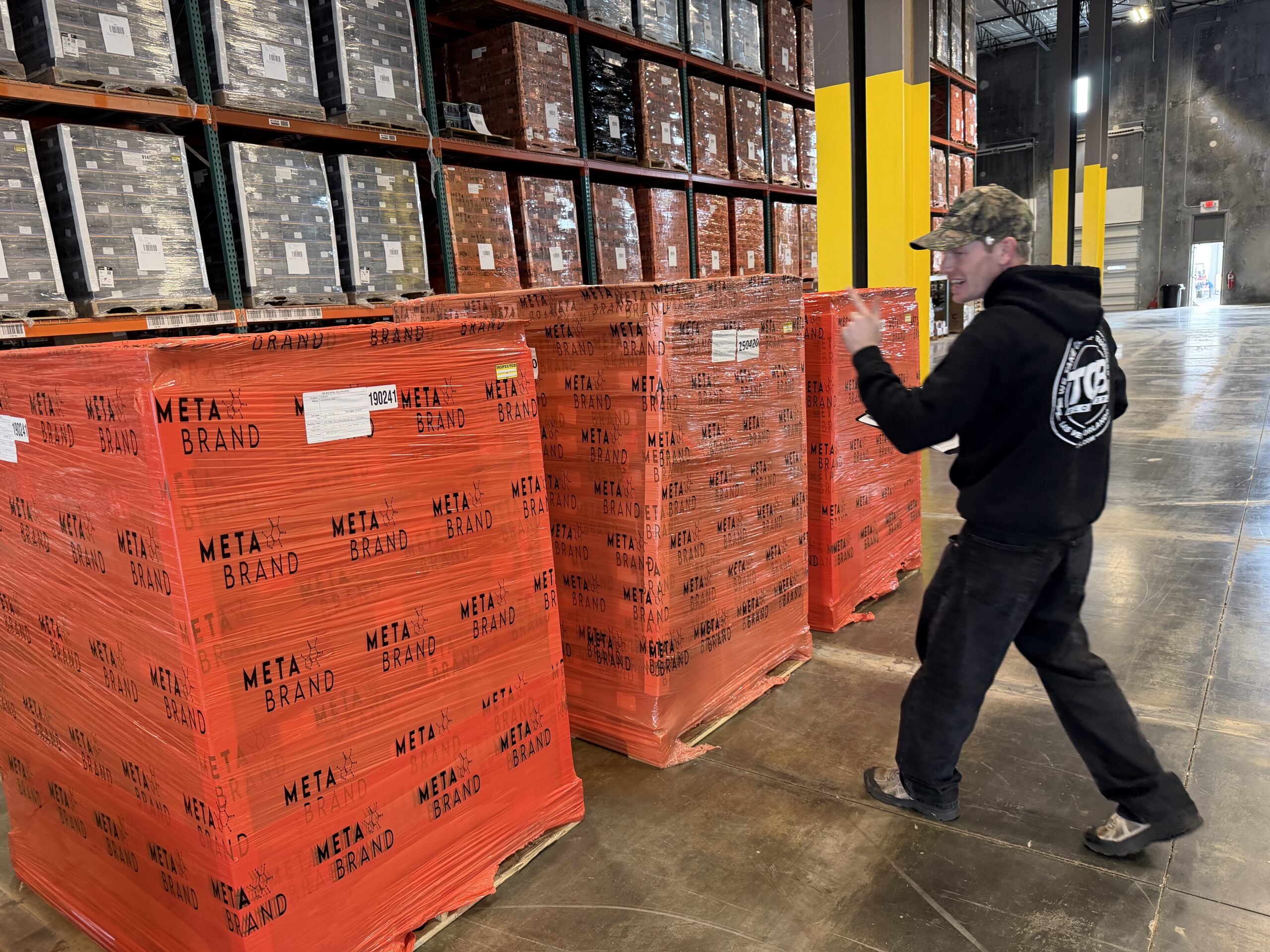
Our warehouse teams follow standardized pallet-building procedures based on retailer requirements.
Each shipment is assembled and verified before transportation begins, reducing errors that lead to costly chargebacks.
Delivery Window Coordination
Retailers expect shipments to arrive exactly when scheduled.
Our logistics team coordinates transportation and scheduling to improve on-time performance and minimize appointment-related penalties.
Accurate Documentation and ASN Management
Shipment documentation is carefully aligned with actual inventory and order details.
Accurate ASNs help retailers receive products efficiently while reducing discrepancies that often trigger deductions.
Optimized Product Handling
Warehouse handling procedures focus on protecting product quality throughout the fulfillment process.
Consistent receiving, storage, picking, packing, and loading processes reduce damage while improving shipment consistency.
Strategic Distribution Network
TCB Global’s fulfillment centers in Orlando and Las Vegas position inventory closer to retail markets nationwide.
This strategic placement helps beverage brands:
- Shorten transit times
- Improve delivery reliability
- Reduce transportation risk
- Support retailer compliance requirements
The result is a stronger, more resilient retail supply chain.
The Benefits of Reducing Beverage Retail Chargebacks
When chargebacks are addressed at the operational level, the improvements extend far beyond accounting.
Brands experience:
- Higher profit margins
- Fewer retailer deductions
- Improved delivery performance
- Stronger retail relationships
- Better operational visibility
- More predictable fulfillment
Most importantly, businesses retain more of the revenue they’ve already earned.
Instead of accepting chargebacks as an unavoidable cost, they create systems that prevent them from occurring in the first place.
Frequently Asked Questions
What causes retail chargebacks in beverage logistics?
The most common causes include labeling errors, incorrect pallet configurations, missed delivery appointments, inaccurate documentation or ASNs, damaged products, and failure to meet retailer compliance requirements.
Can beverage retail chargebacks be prevented?
Yes. While no supply chain is perfect, standardized warehouse processes, accurate documentation, proper labeling, strategic inventory management, and compliance-focused fulfillment significantly reduce chargeback risk.
Why are my retail chargebacks increasing as my business grows?
As shipment volume increases, manual processes become more difficult to manage consistently. Without scalable systems, more shipments create more opportunities for operational errors and retailer deductions.
How can beverage brands reduce chargebacks?
The most effective strategy combines inventory accuracy, standardized fulfillment procedures, compliance verification, proper pallet construction, optimized packaging, and strategic warehouse placement.
How does TCB Global help reduce retail chargebacks?
TCB Global builds beverage logistics systems that prioritize compliance at every stage of fulfillment. Through standardized labeling, controlled pallet builds, accurate documentation, optimized handling, and strategically located distribution centers, we help brands eliminate many of the operational issues that lead to costly retail deductions.
Protect Your Margins with Beverage Distribution Logistics Built for Retail
Retail chargebacks shouldn’t be accepted as a normal cost of doing business. They’re often a sign that your fulfillment processes need stronger controls, better visibility, and systems designed specifically for beverage distribution.
At TCB Global, we help beverage brands eliminate the root causes of retail chargebacks by building logistics operations centered on accuracy, compliance, and consistency. From retailer-ready labeling and pallet configurations to strategic inventory placement and nationwide distribution, our beverage logistics solutions are designed to protect your margins while supporting long-term growth.
If your retail deductions are increasing—or you’re preparing to expand into retail—now is the time to strengthen your supply chain before compliance issues become more expensive.
Learn how TCB Global’s Beverage Distribution Logistics services can help reduce chargebacks, improve retail compliance, and build a stronger distribution network for your growing beverage brand. Visit: https://tcb3pl.com/services/beverage-distribution-logistics/