Launching a beverage brand in the United States is challenging enough. Launching one that is manufactured overseas adds an entirely different level of complexity.
For Soursop Beverage, success depended on far more than consumer demand. The company needed a logistics infrastructure capable of supporting international sourcing, customs clearance, FDA compliance, inventory management, and multi-channel fulfillment—all without slowing its market entry.
This case study explores how TCB Global helped Soursop Beverage establish an integrated International Beverage Import & Fulfillment Logistics system that enabled efficient imports, accelerated fulfillment, and positioned the brand for scalable growth across both direct-to-consumer (DTC) and retail channels.
The Challenge: International Growth Required More Than Demand
Many beverage companies grow regionally before expanding nationally or internationally. Their supply chains evolve alongside customer demand.
Soursop Beverage faced a different situation.
Its products were manufactured internationally and needed to enter the U.S. market quickly to capitalize on emerging opportunities. Production was already underway overseas, containers were moving toward U.S. ports, and interest from domestic retailers was beginning to build.
The opportunity was real.
The challenge was making sure the logistics system could keep pace.
International beverage distribution introduces multiple points where delays can occur:
- Ocean freight coordination
- Customs documentation
- FDA compliance
- Port clearance
- Warehouse receiving
- Inventory staging
- Direct-to-consumer fulfillment
- Retail distribution
When any one of these stages breaks down, the entire supply chain feels the impact.
This is precisely why International Beverage Import & Fulfillment Logistics requires a coordinated system rather than disconnected service providers.
Client Snapshot
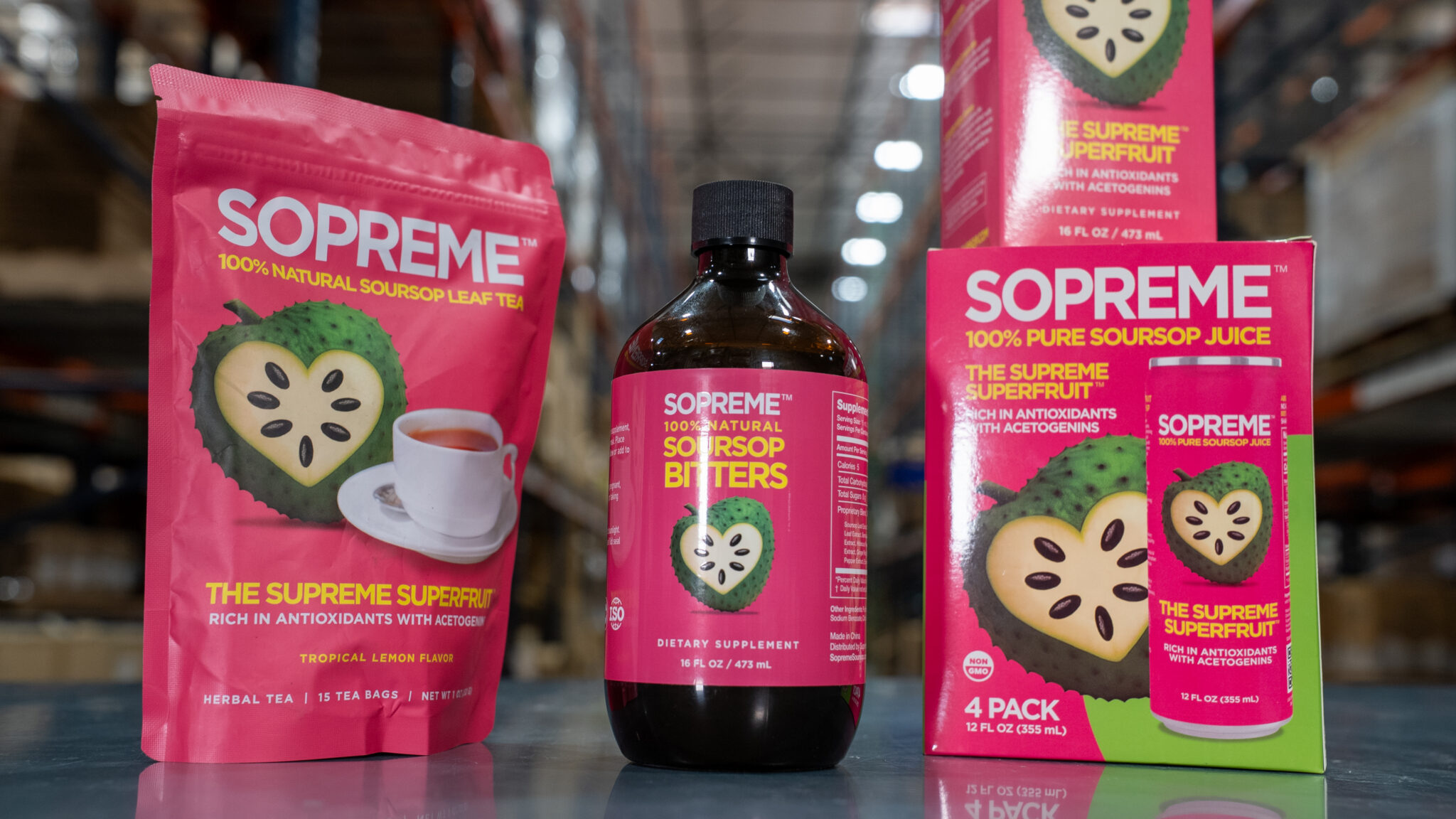
Soursop Beverage operates within the international beverage market, sourcing products overseas for distribution throughout the United States.
Its supply chain included:
- International manufacturing and sourcing
- Ocean freight transportation
- Freight forwarding
- Customs clearance
- FDA compliance
- Warehouse receiving
- Inventory management
- Direct-to-consumer fulfillment
- Retail distribution
Unlike domestic beverage brands, imported products must successfully navigate several regulatory and operational checkpoints before inventory is even available for sale.
As demand accelerated, logistics needed to support both immediate market entry and long-term scalability.
The Real Problem: Supply Chain Misalignment
Contrary to what many companies assume, demand was never the issue.
The real obstacle was coordination.
Import Logistics Needed Greater Structure
International freight requires every shipment to move with accurate documentation and proper coordination between overseas suppliers, freight forwarders, customs officials, and warehouse operations.
Without structured processes, companies face risks such as:
- Port congestion
- Customs delays
- Documentation errors
- FDA compliance issues
- Unpredictable inventory arrival
Each delay creates a ripple effect across the entire supply chain.
Inbound Receiving Was Not Fully Optimized
Once products arrived in the United States, inventory needed to be received, verified, tracked, and staged for immediate fulfillment.
Without standardized receiving procedures, businesses often experience:
- Inventory discrepancies
- Delayed availability
- Fulfillment bottlenecks
- Reduced inventory visibility
Even small delays at this stage can significantly impact speed-to-market.
Compliance Could Not Be Left to Chance
Imported food and beverage products must comply with multiple U.S. regulatory requirements.
Failure to properly manage documentation, product handling, or customs requirements can result in:
- Shipment holds
- Regulatory penalties
- Rejected imports
- Increased storage costs
Compliance is not simply paperwork—it is a foundational part of international beverage logistics.
Fulfillment Needed to Support Multiple Sales Channels
Soursop Beverage was preparing to serve both direct consumers and retail partners simultaneously.
Without structured fulfillment workflows:
- Orders compete for warehouse resources.
- Inventory allocation becomes inconsistent.
- Processing times increase.
- Retail commitments become more difficult to meet.
The issue wasn’t operational failure.
It was friction.
And friction slows growth.
Why Soursop Beverage Chose TCB Global
Rather than solving isolated logistics issues one at a time, TCB Global focused on creating a fully integrated supply chain.
Instead of treating freight, customs, warehousing, and fulfillment as separate services, TCB Global aligned every stage into one coordinated system.
The objective included:
- Coordinating freight forwarding
- Supporting customs clearance
- Maintaining FDA compliance
- Structuring inbound warehouse operations
- Improving inventory visibility
- Building scalable fulfillment processes
- Supporting retail and DTC distribution simultaneously
When each stage works together, products move faster, inventory becomes more predictable, and businesses gain greater operational control.
The Solution: Building an International Beverage Import & Fulfillment Logistics System
Stabilizing International Freight
The first priority was ensuring imported shipments moved efficiently from origin through U.S. entry.
TCB Global coordinated freight forwarding and customs activities to support:
- Accurate shipping documentation
- FDA regulatory compliance
- Efficient customs processing
- Reduced unnecessary delays
By improving visibility throughout the import process, shipment movement became significantly more predictable.
Creating Structured Inbound Receiving
Receiving imported inventory involves much more than unloading containers.
Each shipment must be verified, recorded, inspected when appropriate, and staged for fulfillment.
TCB Global established workflows that ensured inventory was:
- Received accurately
- Accounted for immediately
- Organized within warehouse systems
- Prepared for rapid distribution
Rather than sitting idle after arrival, inventory became available for fulfillment much more quickly.
Supporting Multi-Channel Fulfillment
Soursop Beverage required logistics capable of supporting both growing eCommerce sales and expanding retail partnerships.
TCB Global implemented structured fulfillment workflows that improved:
- Order accuracy
- Inventory visibility
- Picking and packing consistency
- Processing efficiency
Retail distribution was also aligned with partner requirements, ensuring shipments met expected delivery windows and operational standards.
Both channels operated from one coordinated fulfillment system instead of competing against each other.
Prioritizing Speed-to-Market
For imported beverages, time matters.
Shelf life begins long before products reach consumers.
Every unnecessary delay reduces available selling time and increases supply chain costs.
TCB Global designed workflows that minimized idle inventory and accelerated movement from:
Production → Ocean Freight → Customs → Warehouse → Customer
This integrated approach reflects the same operational framework used within TCB Global’s International Beverage Import & Fulfillment Logistics services.
Results
Following implementation, Soursop Beverage experienced measurable operational improvements.
More Efficient Customs Processing
With coordinated documentation and import support, shipments moved through customs more efficiently, reducing unnecessary interruptions within the supply chain.
Better Inventory Control
Inbound receiving became standardized, allowing inventory to be verified, tracked, and prepared for fulfillment immediately upon arrival.
Improved inventory visibility also created greater confidence in operational planning.
Faster Fulfillment
Structured warehouse workflows enabled more consistent order processing across both direct-to-consumer and retail channels.
Products moved through the warehouse with greater speed and accuracy.
Retail Readiness
Improved logistics coordination helped support retail pilot programs by ensuring products arrived on schedule and met operational expectations.
Greater Operational Control
Perhaps the biggest improvement was visibility.
Instead of reacting to delays as they occurred, Soursop Beverage operated with a logistics system designed to anticipate challenges before they became disruptions.
Frequently Asked Questions
What is required to import beverages into the United States?
Importing beverages typically requires proper customs documentation, compliance with applicable FDA regulations, coordinated freight forwarding, warehouse receiving, and an organized fulfillment strategy that supports distribution after arrival.
Why do imported beverage shipments get delayed?
Delays often result from incomplete documentation, customs processing issues, regulatory compliance problems, or poor coordination between freight providers, import specialists, and warehouse operations.
How can beverage brands improve speed-to-market?
The fastest path to market comes from aligning freight forwarding, customs clearance, inbound receiving, inventory management, and fulfillment into one coordinated logistics system.
Can direct-to-consumer and retail fulfillment operate together?
Yes. However, both channels should be supported within an integrated fulfillment operation that maintains inventory visibility, order accuracy, and channel-specific workflows.
Why is logistics alignment important during a product launch?
Product launches create compressed timelines where delays quickly compound. A coordinated logistics strategy helps maintain inventory flow, support customer demand, and reduce disruptions that can slow growth.
Why Beverage Brands Choose TCB Global
Importing beverages successfully requires much more than transportation.
It requires coordination across every stage of the supply chain.
TCB Global supports beverage companies with integrated logistics solutions that include:
- International logistics coordination
- Freight forwarding support
- Customs coordination
- Food and beverage compliance
- Inbound receiving
- Inventory management
- Direct-to-consumer fulfillment
- Retail and wholesale distribution
- Supply chain design and optimization
With operations in Orlando and Las Vegas, TCB Global provides infrastructure that helps brands distribute products nationally while maintaining greater visibility and operational control.
Rather than managing multiple disconnected providers, businesses benefit from a coordinated logistics system designed to support both market entry and long-term growth.
Supporting Long-Term Growth
As beverage companies expand into new regions, retailers, and sales channels, logistics must evolve alongside them.
TCB Global supports continued growth through:
- Import logistics coordination
- Customs support
- Inventory management
- Multi-channel fulfillment
- Retail distribution
- Wholesale logistics
- Demand alignment
- Supply chain scalability
Whether launching into the U.S. market or expanding existing operations, an integrated logistics strategy helps businesses reduce friction while supporting sustainable growth.
Ready to Simplify Your International Beverage Logistics?
If you’re importing beverages into the United States and your supply chain feels like it’s slowing your growth, the solution isn’t to work around those challenges—it’s to build a logistics system designed to eliminate them.
Soursop Beverage didn’t just successfully enter the U.S. market. It established the operational foundation needed to support continued growth across direct-to-consumer and retail channels through a coordinated logistics strategy.
Learn how TCB Global’s International Beverage Import & Fulfillment Logistics solutions can help your brand streamline imports, maintain compliance, accelerate fulfillment, and scale with confidence by visiting https://tcb3pl.com/services/beverage-distribution-logistics/.