The Hidden Logistics Problem That Erodes Profitability
Many growing eCommerce brands assume that increasing sales automatically leads to stronger profitability. In reality, growth often exposes operational weaknesses that quietly reduced shipping costs long before leadership notices a problem.
That was the situation facing Bob’s Coolers.
The company had built strong market demand around a durable, lifestyle-focused product line. Orders were increasing, brand recognition was growing, and both direct-to-consumer (DTC) and business-to-business (B2B) sales channels were gaining momentum.
From the outside, the business appeared to be thriving.
Behind the scenes, however, logistics costs were beginning to create pressure that threatened long-term profitability.
Unlike small parcel products, coolers introduce unique fulfillment challenges. They are oversized, moderately heavy, expensive to ship, and highly sensitive to packaging inefficiencies. These factors make shipping optimization significantly more complex than standard eCommerce fulfillment.
As order volume increased, Bob’s Coolers was simultaneously managing:
- Overseas container shipments arriving regularly
- Inventory verification and organization requirements
- Growing direct-to-consumer fulfillment volume
- Increasing wholesale and retail distribution orders
- Rising transportation costs across multiple channels
Without the right fulfillment infrastructure, shipping costs don’t simply rise alongside growth—they compound. Every inefficient process becomes embedded into the company’s operating expenses.
The challenge wasn’t a lack of sales.
The challenge was building a logistics system capable of supporting growth while protecting margin.
Client Snapshot
Bob’s Coolers operates in the consumer products market, selling durable, oversized products that require specialized fulfillment and transportation strategies.
Their operational profile included:
- Oversized products
- Higher-than-average shipping weights
- Direct-to-consumer order fulfillment
- Wholesale and B2B distribution
- Imported inventory arriving via container shipments
- Multi-channel sales operations
This combination creates a logistics environment that is considerably more complex than traditional eCommerce fulfillment.
To continue scaling efficiently, the company needed:
- Accurate inbound container receiving
- SKU-level inventory verification
- Shipping cost optimization
- Separate workflows for DTC and B2B orders
- Greater inventory visibility
- Scalable operational systems
At the time of engagement, the company had entered a high-growth phase where demand was increasing faster than logistics optimization efforts.
That gap represented a significant margin risk.
What Was Actually Going Wrong?
The issue was not that the company’s logistics operation was failing.
The issue was that inefficiencies were accumulating throughout the fulfillment process.
Inbound Inventory Control Was Limited
When imported inventory arrives without a structured receiving process, small inaccuracies quickly become larger operational problems.
The company faced challenges commonly associated with unstructured container intake, including:
- Inventory discrepancies
- Product miscounts
- Delayed inventory availability
- Limited SKU-level verification
- Reduced inventory accuracy
Without validation at intake, errors tend to move through the entire supply chain, creating fulfillment complications later.
Shipping Costs Were Not Fully Optimized
For oversized products, shipping expenses often become one of the largest operational costs.
Several factors were influencing transportation expenses:
- Dimensional weight pricing
- Packaging inefficiencies
- Carrier selection challenges
- Delivery zone costs
- Routing inefficiencies
Even small cost increases on individual shipments can create substantial margin erosion when multiplied across thousands of orders.
DTC and B2B Fulfillment Workflows Overlapped
Direct-to-consumer fulfillment and business-to-business fulfillment require different processes, packaging requirements, timelines, and service expectations.
Without clearly defined workflows, organizations often experience:
- Processing bottlenecks
- Order handling confusion
- Increased error rates
- Delayed shipments
- Reduced operational efficiency
As order volume grows, these issues become increasingly difficult to manage.
Limited Operational Visibility
The company also lacked the real-time operational visibility needed to make proactive decisions.
Without accurate insight into inventory movement and order flow, teams are often forced into reactive decision-making rather than strategic planning.
The risk was not immediate operational failure.
The risk was gradual margin erosion that would eventually slow growth.
The Turning Point
Bob’s Coolers recognized that the challenge was not temporary.
It was structural.
The company needed more than incremental improvements. They needed a fulfillment system designed specifically for oversized product logistics, shipping cost optimization, and multi-channel distribution.
TCB Global approached the engagement with a focus on building operational control from the ground up.
The objective was to create a scalable logistics framework capable of supporting:
- Oversized product fulfillment
- Inventory accuracy
- Shipping cost reduction
- Multi-channel order management
- Long-term operational scalability
Rather than treating symptoms, the goal was to eliminate inefficiencies at the system level.
Because when the logistics system is optimized, every operational metric improves alongside it.
How TCB Global Fixed the Problem
Structured Container Receiving and Inventory Verification
The first step was establishing control over inbound inventory.
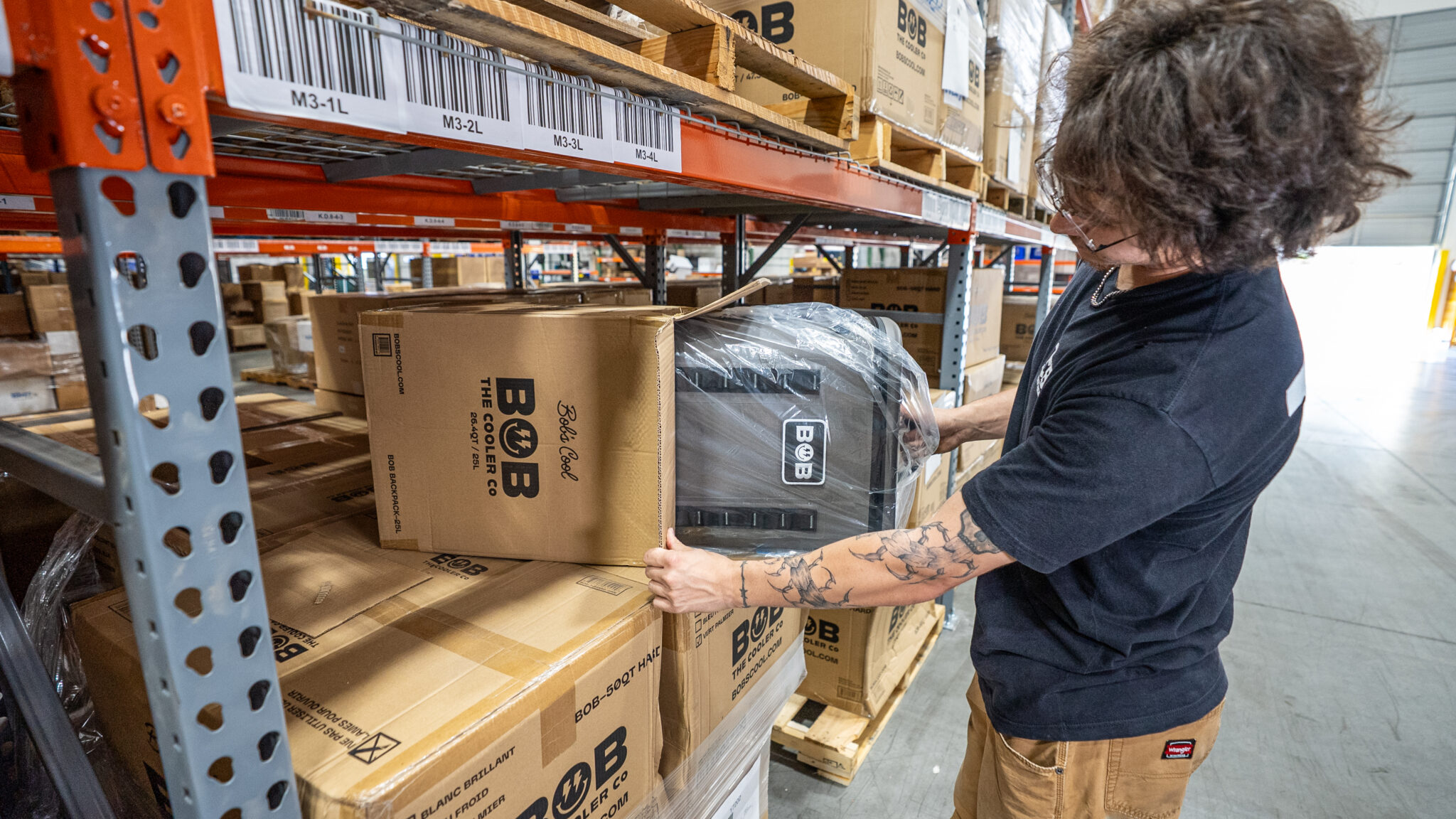
TCB Global implemented a structured container receiving process that included:
- Accurate product counting
- SKU-level verification
- Inventory validation
- Product labeling and organization
- Warehouse receiving protocols
Every unit was verified before entering active inventory.
This significantly reduced downstream fulfillment errors and improved inventory accuracy throughout the operation.
Shipping Cost Optimization Strategy
For oversized products, transportation costs represent one of the greatest opportunities for margin improvement.
TCB Global conducted a comprehensive analysis of:
- Product dimensions
- Product weight profiles
- Packaging configurations
- Carrier pricing structures
- Shipping zones
- Routing opportunities
Using this information, a new shipping strategy was developed that incorporated:
- Negotiated carrier rates
- Optimized packaging methods
- Dimensional weight reduction opportunities
- Strategic carrier selection
- Cost-efficient routing decisions
Rather than making small adjustments, the company fundamentally changed how shipments were evaluated and executed.
Dedicated DTC and B2B Fulfillment Workflows
To eliminate channel confusion, fulfillment processes were segmented by order type.
Dedicated workflows were established for:
Direct-to-Consumer Fulfillment
Designed to support:
- Fast order processing
- Same-day shipping capabilities
- Customer satisfaction goals
- Accurate order execution
Business-to-Business Fulfillment
Structured around:
- Retail compliance requirements
- Wholesale shipment standards
- Larger order volumes
- Distribution consistency
By separating these workflows, operational efficiency improved across both channels.
Real-Time Inventory and Order Visibility
Visibility became a core component of the new logistics framework.
Inventory and order activity were monitored through structured tracking systems that provided greater transparency into:
- Inventory availability
- Order status
- Fulfillment performance
- Operational capacity
This enabled more proactive planning and improved decision-making across the organization.
Building for Scale
Perhaps most importantly, the system was designed to grow alongside the business.
As order volume increased, workflows continued performing without introducing bottlenecks or service disruptions.
The result was a fulfillment operation capable of supporting continued expansion.
The Results
The improvements generated measurable operational gains across multiple areas.
Shipping Costs Reduced by Nearly 40%
The most significant impact came from transportation optimization.
By improving packaging efficiency, carrier selection, and routing strategies, Bob’s Coolers reduced shipping expenses by nearly 40%.
This created immediate margin improvements across every order.
Faster Order Processing
With streamlined workflows in place, orders moved through the fulfillment process more efficiently.
Same-day shipping became possible for qualifying orders, improving customer experience and delivery performance.
Increased Inventory Accuracy
Structured receiving and inventory verification processes improved stock accuracy and reduced discrepancies.
The company gained greater confidence in inventory availability and planning.
Seamless Multi-Channel Fulfillment
DTC and B2B orders could now be processed simultaneously without creating operational conflicts.
Each channel operated according to its own requirements while remaining integrated within the overall logistics system.
Improved Operational Control
Leadership gained visibility into inventory, shipping performance, and fulfillment activity.
Rather than reacting to issues, the company could proactively manage growth.
Protected Profit Margins
Most importantly, profitability was protected as the company scaled.
The logistics operation became a growth enabler rather than a margin drain.
Why This Matters for Other Growing Brands
Why Are Shipping Costs So High for Oversized Products?
Oversized products are heavily affected by dimensional weight pricing, packaging inefficiencies, and carrier rate structures. Without optimization, transportation costs can escalate rapidly.
How Can Brands Reduce Fulfillment Shipping Costs?
Shipping costs are reduced by aligning packaging design, product dimensions, carrier selection, routing strategies, and fulfillment workflows to minimize unnecessary expenses.
What Happens If Logistics Problems Aren’t Fixed Early?
Inefficiencies become embedded within the business. As volume grows, these costs compound and gradually reduce profitability.
How Should Brands Manage Both DTC and B2B Fulfillment?
Separate workflows should be established for each channel to ensure accuracy, efficiency, and scalability.
When Is the Right Time to Optimize Fulfillment Operations?
Before shipping costs and operational inefficiencies become part of the company’s permanent cost structure.
Why Brands Choose TCB Global
TCB Global specializes in helping growing brands overcome operational complexity through scalable third-party logistics solutions.
With strategically located fulfillment operations in Orlando, Florida, and Las Vegas, Nevada, TCB Global supports nationwide distribution while maintaining operational control and visibility.
Core capabilities include:
- Oversized product fulfillment
- 3PL fulfillment services
- Shipping cost optimization
- Inventory control systems
- Multi-channel logistics
- B2B and DTC fulfillment
- Container receiving and inventory management
- Scalable warehouse operations
TCB Global does more than move inventory.
The company builds fulfillment systems designed to support sustainable growth and long-term profitability.
Supporting Scale Beyond Today
As brands expand into new channels and markets, fulfillment requirements become increasingly complex.
TCB Global supports growth through:
- Shopify fulfillment and eCommerce integrations
- Direct-to-consumer fulfillment
- Retail and wholesale distribution
- Oversized product logistics
- Inventory planning and forecasting
- Ongoing operational optimization
The fulfillment system evolves as the business evolves.
That flexibility allows brands to continue scaling without sacrificing efficiency, service quality, or profitability.
Ready to Reduce Shipping Costs and Protect Margin?
If your products are growing in popularity but shipping costs are increasing alongside demand, the problem may not be sales volume—it may be your fulfillment system.
Bob’s Coolers recognized the issue before logistics inefficiencies became permanent costs. By optimizing inventory control, shipping strategy, and multi-channel fulfillment operations, they built a system capable of supporting growth while protecting margin.
If you’re facing rising transportation expenses, fulfillment challenges, inventory visibility issues, or operational pressure from rapid growth, now is the time to take control.
TCB Global helps high-growth brands build scalable fulfillment systems that reduce costs, improve efficiency, and support long-term expansion.
Learn how our specialized fulfillment solutions help growing brands scale efficiently by visiting: https://tcb3pl.com/services/fulfillment-for-high-growth-brands/