For bike brands, logistics can quietly become one of the biggest threats to profitability.
Margins that look healthy on paper start disappearing once shipping, packaging, and fulfillment expenses stack up. Oversized boxes, inconsistent carrier pricing, damaged products, and inefficient inventory placement create operational costs that scale faster than revenue.
And the problem only gets worse as brands grow.
Whether you sell complete bicycles, carbon frames, wheelsets, accessories, or aftermarket components, bike logistics is one of the most operationally complex categories in ecommerce fulfillment.
The reality is simple:
Bike shipping costs are expensive by design unless your logistics system is built specifically to handle oversized and high-SKU inventory efficiently.
That’s why more brands are moving away from generic warehouse providers and partnering with specialized 3PL fulfillment companies that understand the unique challenges of bicycle logistics.
In this guide, we’ll break down:
- Why bike shipping costs are so high
- What causes logistics inefficiencies in the bike industry
- How fulfillment strategy impacts profitability
- Ways to reduce shipping and operational costs
- How TCB Global helps high-growth bike brands scale smarter
Why Bike Shipping Costs Are So High
Shipping bikes and bike parts is fundamentally different from shipping standard ecommerce products.
Most fulfillment systems are designed around compact, lightweight parcels. Bikes don’t fit that model.
Instead, brands face challenges like:
- Oversized freight
- Irregular product dimensions
- Fragile components
- High SKU variation
- Multi-channel inventory complexity
- Expensive dimensional weight pricing
Without a logistics system specifically optimized for bike fulfillment, operational inefficiencies compound quickly.
And those inefficiencies directly impact margins.
The Biggest Problems in Bike Logistics
1. Oversized Freight and Dimensional Weight Charges
Complete bikes and large frames take up significant shipping space, even when partially disassembled.
Carriers calculate shipping costs using dimensional weight pricing, meaning brands are charged based on package size—not just actual weight.
If packaging isn’t optimized properly, brands end up paying to ship empty space.
This creates:
- Higher shipping rates
- Increased zone costs
- Reduced profitability per order
For many bike brands, oversized freight becomes one of the largest operational expenses.
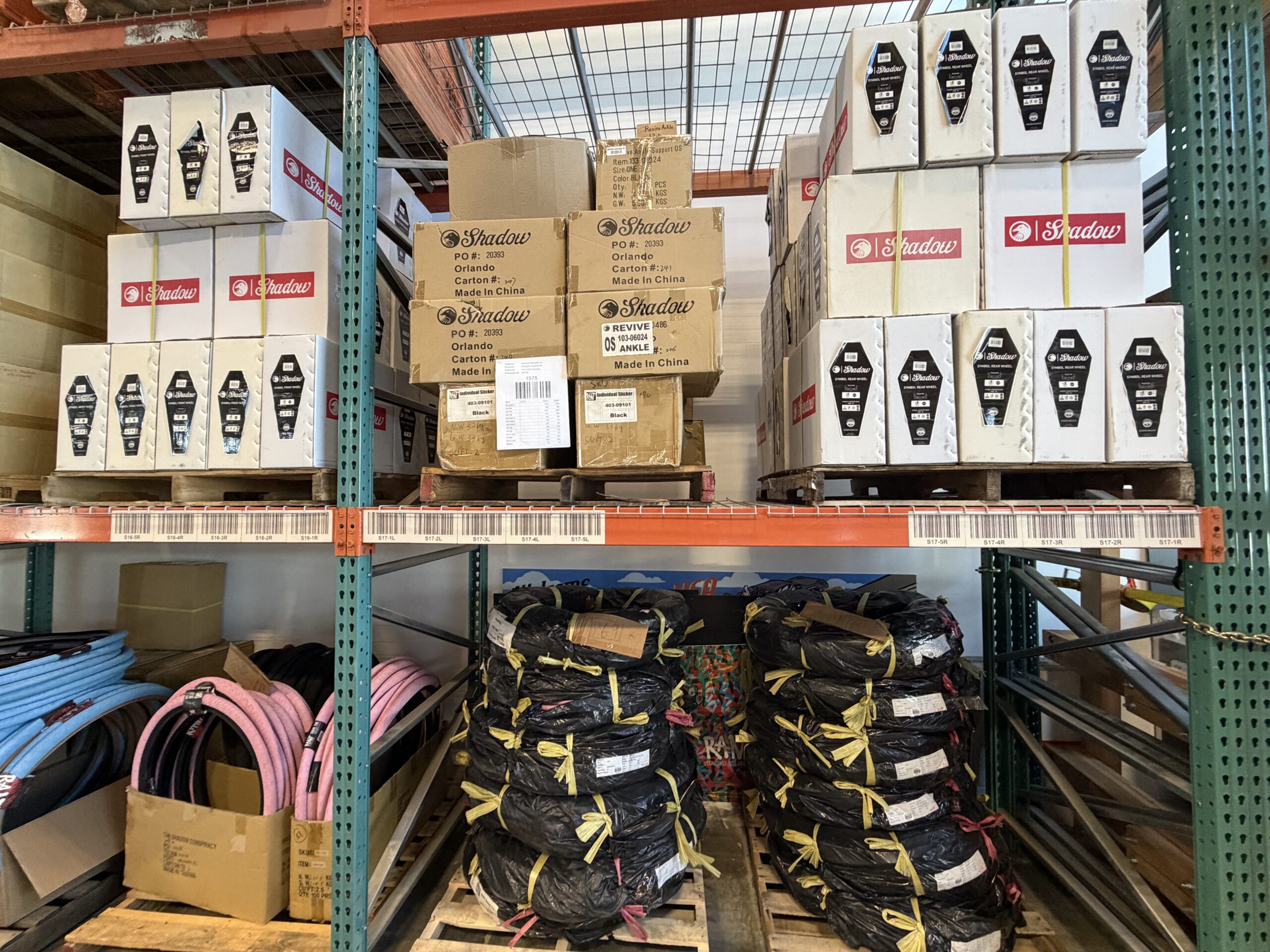
2. SKU Complexity Creates Fulfillment Problems
Bike brands rarely manage a simple inventory catalog.
Most operations include products like:
- Complete bicycles
- Carbon and alloy frames
- Wheelsets
- Tires and tubes
- Drivetrain components
- Handlebars and stems
- Accessories and apparel
Each product category has different:
- Storage requirements
- Packaging methods
- Picking procedures
- Shipping profiles
Without structured warehouse systems, fulfillment errors increase rapidly.
That often leads to:
- Mis-picks
- Inventory discrepancies
- Delayed shipments
- Customer complaints
- Increased labor costs
As SKU counts grow, operational inefficiencies grow with them.
3. Inconsistent Packaging Increases Costs and Damage
Packaging inconsistency is one of the most overlooked problems in bike fulfillment.
Many brands unknowingly use multiple packaging methods depending on who fulfills the order.
That variability creates major issues, including:
- Higher dimensional weight charges
- Product movement during transit
- Increased damage rates
- Slower packing workflows
- Inconsistent customer experience
Fragile products like carbon frames, derailleurs, wheelsets, and suspension components require highly structured packaging systems.
Without standardization, damage claims and replacement costs increase significantly.
4. Poor Inventory Placement Increases Shipping Costs
Many brands store all inventory in a single warehouse location.
That creates a major problem for oversized products.
Every shipment traveling across the country becomes expensive.
If inventory is positioned too far from customers, brands face:
- Higher shipping zones
- Longer transit times
- Increased expedited shipping costs
- Reduced delivery performance
Strategic inventory placement is one of the fastest ways to reduce bike shipping costs.
How to Reduce Bike Shipping Costs
The good news is that shipping costs can be reduced substantially with the right fulfillment strategy.
Here are the most effective ways scaling bike brands lower operational expenses:
1. Optimize Packaging for Oversized Products
Packaging optimization is one of the highest-impact improvements a bike brand can make.
Custom packaging systems help reduce:
- Dimensional weight charges
- Transit damage
- Material waste
- Packing inefficiencies
The goal is to create packaging that balances:
- Product protection
- Shipping efficiency
- Carrier compliance
- Cost control
For oversized freight categories like bicycles, packaging engineering matters far more than most brands realize.
2. Use Regional Fulfillment Centers
Strategic warehouse placement reduces shipping distance and lowers zone-related carrier costs.
Brands that distribute inventory across multiple fulfillment centers can:
- Reduce transit times
- Lower shipping expenses
- Improve customer delivery speed
- Decrease reliance on expedited shipping
For example, fulfillment centers in Orlando and Las Vegas provide strong geographic coverage across the United States.
This allows inventory to move regionally instead of shipping coast-to-coast on every order.
3. Standardize Fulfillment Processes
Operational consistency is critical in high-SKU environments.
Standardized fulfillment systems improve:
- Picking accuracy
- Packing consistency
- Inventory visibility
- Workflow efficiency
This reduces costly mistakes while improving customer experience.
Structured workflows also help brands scale without operational breakdowns during peak demand periods.
4. Build Carrier Flexibility Into Your Shipping Strategy
Many bike brands rely too heavily on a single carrier.
That limits pricing flexibility and increases vulnerability to rate changes.
A smarter approach uses multiple carriers based on:
- Package dimensions
- Product type
- Delivery region
- Shipping speed requirements
Carrier diversification creates more control over logistics costs while improving service reliability.
Multi-Channel Fulfillment Adds Another Layer of Complexity
Modern bike brands rarely operate through one sales channel.
Most are balancing a combination of:
- Direct-to-consumer ecommerce
- Retail distribution
- Wholesale accounts
- Marketplace sales
- Events and activations
Each channel creates unique fulfillment requirements.
DTC Ecommerce
Customers expect:
- Fast delivery
- Accurate tracking
- Premium unboxing experience
- Damage-free arrivals
Retail Distribution
Retail fulfillment requires:
- Compliance labeling
- Pallet coordination
- Shipment scheduling
- Bulk inventory management
Wholesale Fulfillment
Wholesale orders create additional complexity involving:
- Larger shipment volumes
- Inventory allocation
- Freight coordination
- Operational forecasting
Without integrated logistics systems, operational friction grows quickly across channels.
Why Bike Brands Choose TCB Global
At a certain stage of growth, brands stop looking for basic warehouse space and start looking for a fulfillment system designed to support scale.
That’s where TCB Global comes in.
TCB Global specializes in fulfillment strategies for complex product categories, including oversized products, high-SKU inventory, and multi-channel distribution.
Their operations in Orlando, FL and Las Vegas, NV help brands reduce shipping costs through smarter inventory placement and regional fulfillment optimization.
TCB Global helps bike brands improve logistics by focusing on:
- Packaging optimization
- Regional distribution strategy
- Multi-carrier shipping flexibility
- Structured fulfillment workflows
- Real-time inventory visibility
- Scalable operational systems
Instead of using generic fulfillment models, TCB Global builds logistics systems designed around operational efficiency and long-term growth.
Learn more about their fulfillment solutions for scaling brands here.
Common Questions About Bike Shipping and Fulfillment
Why is shipping a bike so expensive?
Bike shipments are expensive because carriers charge dimensional weight pricing for oversized packages.
Packaging inefficiencies and long-distance shipping also increase costs significantly.
How can bike brands reduce shipping costs?
Brands can reduce shipping costs by:
- Optimizing packaging
- Using regional fulfillment centers
- Improving inventory placement
- Diversifying carriers
- Standardizing fulfillment workflows
Why do bike products get damaged during shipping?
Damage often occurs because of inconsistent packaging, improper stabilization, and poor handling processes.
Structured packaging systems reduce movement and transit risk.
Can a 3PL help reduce bike logistics costs?
Yes. A specialized 3PL can optimize fulfillment strategy, inventory distribution, packaging, and carrier selection to reduce overall operational expenses.
Final Thoughts: Smarter Logistics Creates Stronger Margins
Bike logistics will always be more complex than standard ecommerce fulfillment.
But complexity doesn’t have to destroy profitability.
The brands that scale successfully are the ones that build systems around:
- Operational consistency
- Strategic inventory placement
- Packaging optimization
- Multi-channel coordination
- Fulfillment efficiency
Without those systems, shipping costs continue increasing as the business grows.
TCB Global helps high-growth brands build fulfillment operations that reduce costs, improve shipping performance, and support long-term scalability.
If your current logistics system feels unpredictable, expensive, or difficult to manage, it may be time to rethink how your fulfillment strategy is built.
Explore TCB Global’s fulfillment solutions for high-growth brands here.