Why Specialized 3PL Infrastructure Is Critical for Growing Beverage Brands
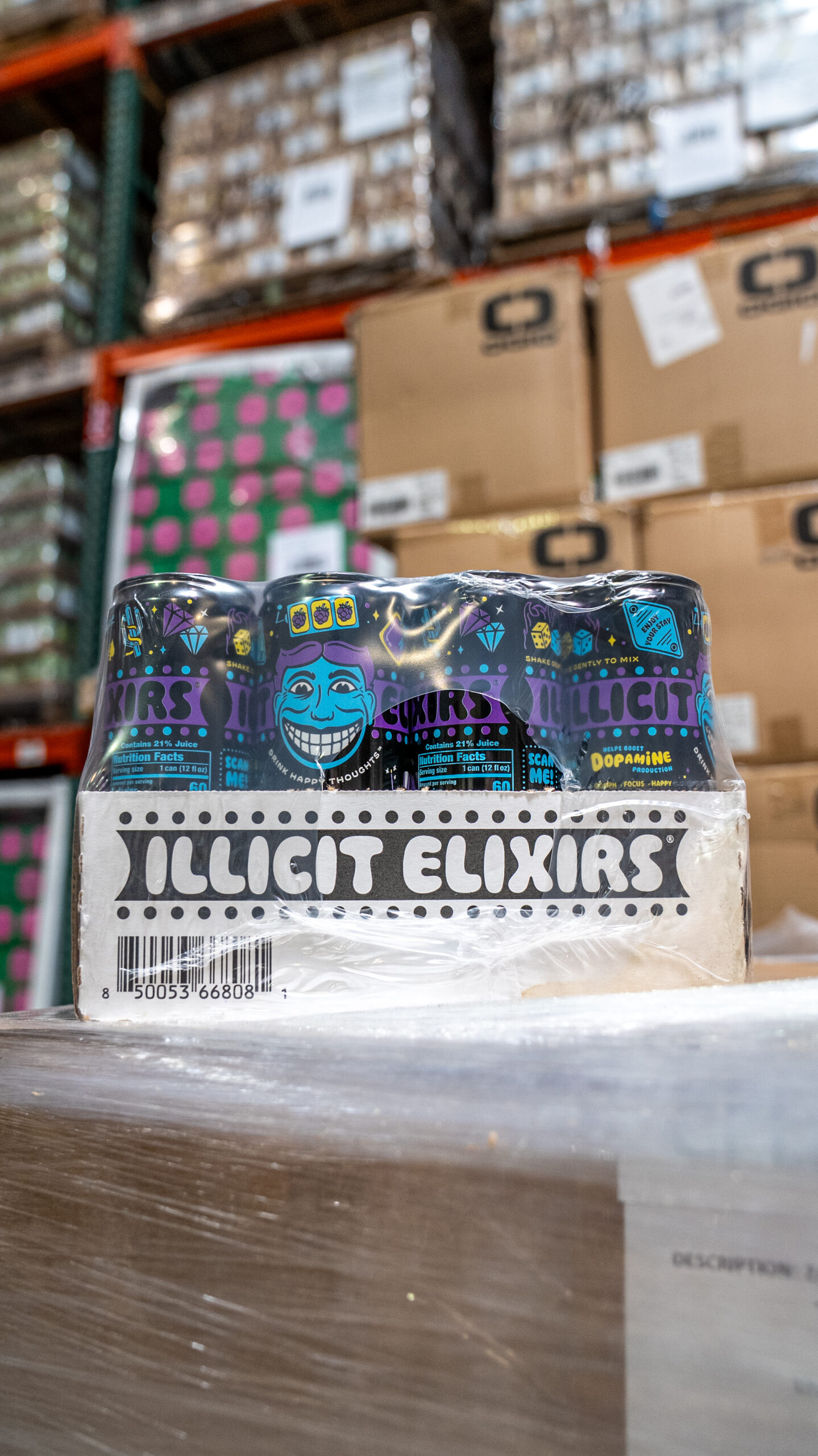
Beverage Fulfillment is fundamentally different from standard product warehousing. Beverage brands operate in one of the most operationally sensitive categories in modern logistics. Products are often liquid-based, fragile, heavy, and highly variant-driven. They move across multiple distribution channels simultaneously — direct-to-consumer (DTC), retail, wholesale, hospitality, and subscription — all while maintaining strict quality, compliance, and delivery expectations.
When Beverage Fulfillment is executed correctly, customers receive products intact and on time, retailers remain stocked, distributors maintain confidence, and revenue flows consistently. When it breaks down, the impact is immediate: breakage, stockouts, late shipments, retail chargebacks, inaccurate inventory, and damaged brand credibility.
As beverage brands scale regionally or nationally, many quickly discover that traditional warehouse models are not built to manage the complexity of liquid products and multi-channel fulfillment. What worked during early-stage growth often becomes unsustainable as SKU counts expand, order volume increases, and retail partnerships grow.
This is why companies increasingly search for a specialized 3PL partner with proven experience in Beverage Fulfillment — not simply a warehouse provider, but an operational infrastructure designed to protect product integrity, maintain inventory accuracy, and support scalable growth.
What Is Beverage Fulfillment?
Beverage Fulfillment refers to the specialized processes required to store, manage, pick, pack, and ship beverage products across multiple sales channels while maintaining product integrity, compliance, and real-time inventory accuracy.
It typically includes:
- Inbound receiving and inspection
- Organized storage for fragile and liquid products
- Real-time inventory management
- Pick and pack services for DTC and retail orders
- Retail compliance preparation
- Freight coordination and national distribution
- Returns processing and inventory reconciliation
Unlike general fulfillment, Beverage Fulfillment must account for weight, fragility, leakage risk, SKU complexity, and retail routing requirements. Precision and structured workflows are essential.
Why Beverage Fulfillment Requires More Than Basic Warehousing
Many fulfillment providers offer storage and shipping capabilities. However, beverage brands require additional safeguards and discipline to prevent costly disruptions.
1. Fragile and Liquid Inventory Management
Glass bottles, aluminum cans, and specialty packaging require careful handling. Improper stacking, poor pallet configuration, or inadequate protective packaging can result in breakage, leakage, and damaged shipments.
2. Heavy and High-Volume Case Handling
Beverage cases are heavier than many consumer goods. Warehouse infrastructure must support efficient material handling, pallet stability, and optimized freight planning.
3. SKU Proliferation
Flavor variations, seasonal releases, limited editions, and packaging changes create complex SKU environments. Without structured location mapping and system controls, picking errors increase.
4. Multi-Channel Complexity
DTC shipments require protective packaging and fast turnaround. Retail shipments demand strict compliance. Wholesale distribution requires pallet-level accuracy. Managing all three simultaneously requires a unified system.
A professional Beverage Fulfillment operation integrates all of these variables into one coordinated infrastructure.
A National Beverage Fulfillment Infrastructure
TCB Global operates as a national third-party logistics provider with warehouse locations in Orlando, Florida and Las Vegas, Nevada. This dual-location model allows beverage brands to execute a coordinated national Beverage Fulfillment strategy while maintaining operational consistency and visibility.
- Orlando supports distribution across the Southeast and East Coast, with proximity to major ports and population centers.
- Las Vegas provides efficient reach across the West Coast, Southwest, and central United States.
Strategic geographic positioning reduces shipping zones, shortens transit times, and minimizes breakage risk. For beverage brands, regional inventory placement also reduces stockout exposure and supports faster retail replenishment cycles.
Brands evaluating the best 3PL in Orlando or the best 3PL Las Vegas are often preparing for expansion. Geographic alignment plays a direct role in fulfillment efficiency and revenue protection.
How Professional Beverage Fulfillment Works: Step-by-Step
Understanding the workflow behind professional Beverage Fulfillment helps brands evaluate operational readiness.
1. Structured Inbound Receiving
Inbound shipments are scheduled and verified against purchase orders. Products are inspected for packaging integrity and quantity accuracy before entering inventory systems. This reduces downstream discrepancies.
2. Organized Storage and Location Mapping
Inventory is stored according to structured warehouse mapping to minimize unnecessary handling. Fragile items are positioned for stability, reducing breakage risk.
3. Real-Time Inventory Tracking
Integrated warehouse management systems (WMS) provide live visibility into SKU counts, movement, and order status. This prevents overselling and supports proactive replenishment planning.
4. Channel-Specific Order Routing
Orders are routed through defined workflows based on channel type:
- DTC orders receive protective packaging and rapid processing.
- Retail shipments follow strict compliance protocols, including labeling and pallet configuration.
- Wholesale orders are prepared with pallet-level accuracy.
5. Quality Control Checkpoints
Verification steps are embedded throughout the fulfillment process to reduce mis-picks, labeling errors, and shipping inaccuracies.
6. Optimized Carrier Coordination
Shipments are staged and dispatched through optimized carrier networks to maintain delivery timelines and minimize transit risk.
This structured approach ensures consistency as order volume and distribution complexity increase.
Frequently Asked Questions About Beverage Fulfillment
What makes Beverage Fulfillment different from general fulfillment?
Beverage Fulfillment requires specialized handling for fragile and liquid products, compliance preparation for retail shipments, and systems capable of managing multi-channel distribution simultaneously.
Can a 3PL reduce breakage and leakage?
Yes. Proper storage protocols, secure pallet configurations, and protective packing standards significantly reduce transit damage.
How does Beverage Fulfillment prevent stockouts?
Real-time inventory tracking and geographic inventory placement help brands anticipate demand and replenish inventory before shortages occur.
Can one 3PL manage both DTC and retail fulfillment?
A scalable Beverage Fulfillment provider integrates all channels within a unified operational system to prevent allocation errors and overselling.
Supporting Multi-Channel Beverage Fulfillment at Scale
Modern beverage brands rarely operate in a single channel. DTC growth often complements retail expansion, while wholesale and subscription programs add further complexity.
A scalable Beverage Fulfillment partner centralizes inventory and integrates all order streams into one operational framework. This prevents:
- Inventory imbalances
- Channel allocation errors
- Overselling
- Fulfillment delays
By maintaining unified systems across Orlando and Las Vegas facilities, beverage brands can distribute nationally while preserving control and visibility.
Choosing a Beverage Fulfillment Partner Built for Growth
Selecting a Beverage Fulfillment partner is ultimately a strategic decision about long-term scalability and operational stability.
The right 3PL should provide:
- National distribution capabilities
- Real-time inventory visibility
- Retail compliance expertise
- Structured workflows for fragile and liquid products
- Multi-channel fulfillment support
- Transparent performance reporting
As beverage brands expand product lines and distribution networks, fulfillment infrastructure must scale alongside them. Without disciplined systems, growth can introduce operational risk.
TCB Global’s Beverage Fulfillment operations are structured to support this evolution. With warehouse facilities in Orlando and Las Vegas, brands gain geographic reach, operational consistency, and scalable infrastructure designed specifically for beverage logistics.
Optimize Your Beverage Fulfillment Strategy Today
For beverage brands, fulfillment is not a back-end function. It is a revenue protection system. Accurate inventory, compliant retail shipments, secure packaging, and on-time delivery all directly impact profitability and brand reputation.
If your company is experiencing growing pains, expanding into new retail markets, or scaling direct-to-consumer sales, it may be time to evaluate whether your current fulfillment infrastructure can support sustained growth.
TCB Global provides specialized Beverage Fulfillment solutions built for fragile and liquid products, multi-channel distribution, and national reach from Orlando and Las Vegas.
Learn how a structured and scalable Beverage Fulfillment strategy can reduce risk, improve delivery performance, and support long-term expansion.
Visit https://tcb3pl.com/services/beverage-distribution-logistics/ to explore how TCB Global can optimize your Beverage Fulfillment operations and position your brand for sustainable growth.