Beverage inventory problems almost never appear as one obvious breakdown. Instead, they show up as small, repeated issues—missed reorders, excess pallets, emergency shipments—that quietly compound into significant financial losses over time.
Because beverages are heavy, often shelf-life sensitive, and subject to strict retailer compliance requirements, inventory mistakes are far more expensive than they initially appear. Below are six hidden costs of poor beverage inventory management that consistently limit beverage brand growth—and how the right logistics strategy can prevent them.
1. Stockouts That Stall Growth
Stockouts are one of the fastest ways for a beverage brand to lose momentum.
When inventory data is inaccurate, brands oversell available product, miss reorders, or fail to support promotions. Retailers and distributors rely on consistent availability, and repeated stockouts quickly erode trust.
Over time, this leads to lost shelf space, canceled promotions, and reduced distribution opportunities. Even short inventory gaps can have long-term consequences for brands trying to scale in competitive beverage categories.
2. Overstocking That Drains Cash Flow
On the opposite end of the spectrum, overstocking quietly creates just as much damage.
Without reliable inventory visibility, brands often over-order as a safety measure. While this feels protective, excess inventory ties up working capital, increases storage costs, and raises the risk of expiration.
Cash that should be invested in marketing, production, or expansion instead sits idle in a warehouse. Over time, this hidden cash flow drain slows growth and reduces operational flexibility.
FAQs: Why Beverage Inventory Is Uniquely Risky
Why is beverage inventory management different from other products?
Beverages are heavy, frequently regulated, and often have shelf-life requirements. Shipping costs, retail compliance standards, and expiration risk make inventory accuracy far more critical than in many other categories.
How does poor inventory management impact cash flow?
It leads to over-ordering, excess storage fees, expired product, and rush freight—each of which ties up cash and reduces profitability.
3. Expired, Damaged, or Lost Product
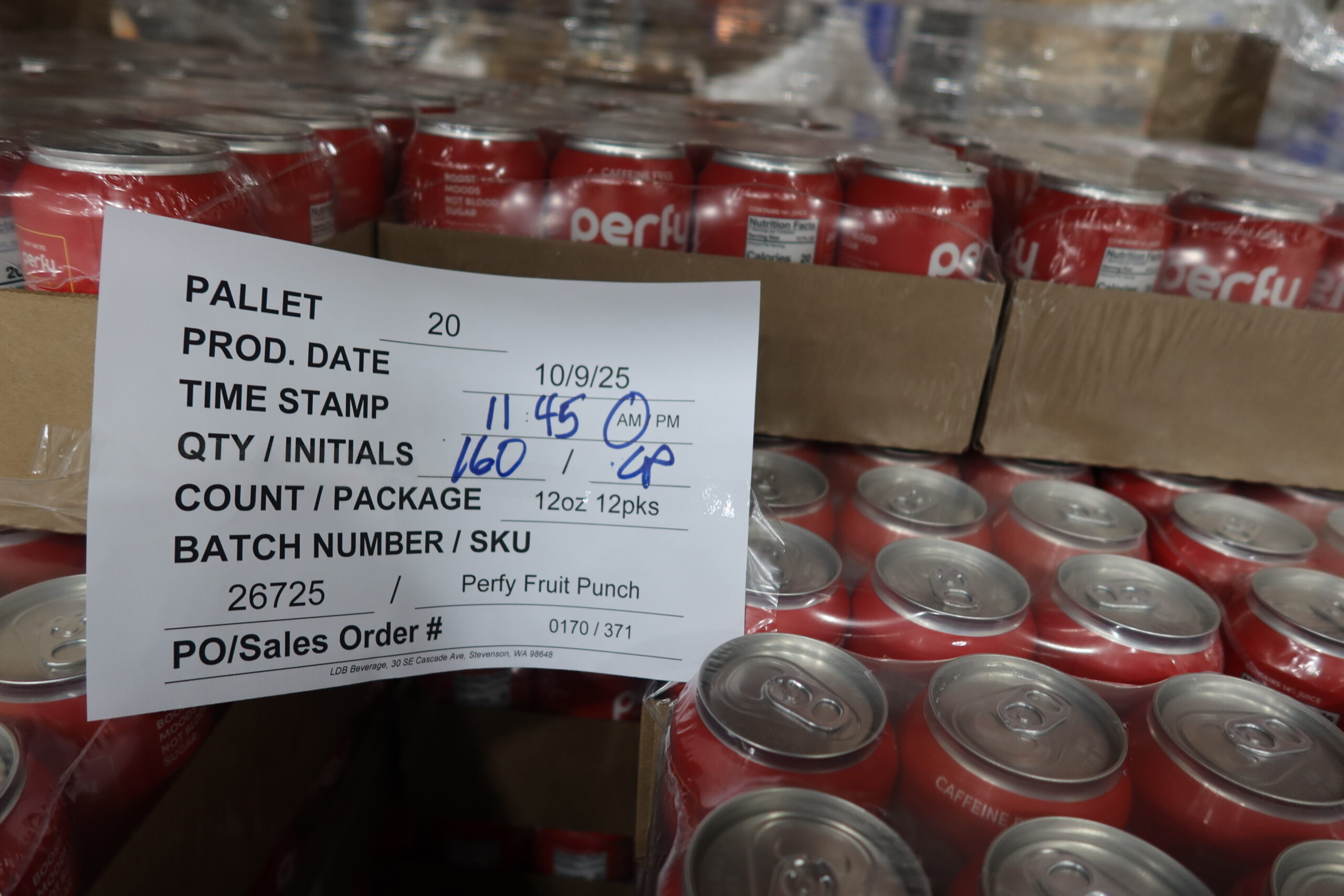
Without proper lot tracking and FIFO or FEFO controls, beverage inventory issues often remain invisible until the product can no longer be sold.
Expired, damaged, or misplaced inventory is frequently discovered during order picking or after a retailer rejection. By then, the product has already lost its value.
For beverage brands, First In, First Out (FIFO) and First Expired, First Out (FEFO) processes are essential. Without them, expiration and write-offs quietly erode margins month after month.
4. Retail Chargebacks and Compliance Issues
Inventory inaccuracies don’t just affect internal operations—they directly impact retailer relationships.
Incorrect quantities, partial shipments, ASN mismatches, and late deliveries often originate from unreliable inventory data. Retailers respond with chargebacks, penalties, and compliance escalations.
Over time, recurring compliance issues can limit distribution opportunities or jeopardize existing retail accounts altogether.
5. Rush Freight and Emergency Fixes
When inventory planning breaks down, brands are forced into reactive mode.
Emergency replenishments, expedited shipping, and split loads become common fixes for inventory shortfalls. While sometimes unavoidable, rush freight is one of the most expensive consequences of poor inventory control.
With disciplined inventory processes and coordinated transportation planning, many of these emergency costs are preventable. Proactive inventory management reduces last-minute freight decisions that erode margins.
FAQs: Inventory Controls and Compliance
Can inventory issues lead to retail chargebacks?
Yes. Late deliveries, ASN errors, and incorrect quantities frequently stem from inaccurate inventory records and poor allocation.
What is FIFO and FEFO in beverage inventory?
FIFO (First In, First Out) moves the oldest product first. FEFO (First Expired, First Out) prioritizes product closest to expiration—both are essential for beverage shelf-life management.
6. Multi-Channel Inventory Conflict
As beverage brands grow, they often sell across multiple channels, including DTC, wholesale, retail, and online marketplaces.
Without accurate inventory allocation, these channels begin competing for the same stock. The result is canceled orders, fulfillment failures, and inconsistent customer experiences across platforms.
Instead of enabling growth, inventory becomes a bottleneck that limits channel expansion and complicates demand planning.
How TCB Global Helps Prevent These Inventory Failures
Avoiding these hidden costs requires beverage-specific inventory controls—not generic warehouse practices.
Through its beverage distribution logistics services, TCB Global applies inventory processes designed specifically for the weight, shelf-life, and compliance demands of beverage brands.
With national 3PL support and bi-coastal operations—including beverage distribution in Orlando and a strategically located Las Vegas distribution facility—brands gain:
- Accurate, real-time inventory visibility
- Predictable replenishment planning
- Standardized receiving and lot tracking
- Reduced compliance risk and chargebacks
These controls help eliminate the small, compounding inventory failures that quietly undermine profitability.
See the Results in Action: Read the Tahoe Artisan Water Case Study
Understanding inventory best practices is one thing—seeing them applied successfully is another.
To see how disciplined beverage inventory management translates into measurable results, read the Tahoe Artisan Water case study.
The case study shows how improved inventory visibility and beverage-grade logistics helped:
- Reduce expiration and waste
- Improve retail compliance
- Protect cash flow
- Support scalable growth across channels
If inventory challenges are slowing your growth—or quietly increasing your costs—the Tahoe Artisan Water case study provides a clear, real-world example of what’s possible when beverage inventory is managed correctly.
Read the case study to see how beverage brands solve inventory problems before they become costly failures.