The Critical Role of a Beverage 3PL in Scaling Operations
The beverage industry is one of the fastest-moving and most competitive sectors in modern commerce. From functional beverages and ready-to-drink products to energy drinks and specialty formulations, new brands are entering the market at an accelerated pace.
With this growth comes complexity. As brands expand across direct-to-consumer (DTC), retail, and wholesale channels, logistics quickly becomes a defining factor in long-term success. Choosing the right beverage 3PL for fast-scaling brands is no longer optional—it is a strategic decision that directly impacts operational efficiency, product integrity, and customer experience.
This blog examines why not every third-party logistics provider is equipped to support beverage growth and what high-growth brands should look for in a scalable logistics partner.
The Challenge: Why Beverage Logistics Is More Complex Than Standard Fulfillment
At first glance, fulfillment may seem similar across industries. However, beverage logistics introduces a unique set of challenges that generic 3PL providers are often not built to handle.
Product-Specific Complexity
Beverage products are:
- Heavy and expensive to ship
- Fragile due to glass or aluminum packaging
- Susceptible to leakage and damage
- Sensitive to handling conditions
Without specialized processes, these factors can lead to increased breakage, higher shipping costs, and customer dissatisfaction.
Rapid SKU Expansion
As brands grow, product lines expand quickly to include:
- Multiple flavors
- Various package sizes
- Seasonal or limited-edition releases
This creates significant inventory management complexity, requiring advanced systems to track and manage each SKU accurately.
Multi-Channel Distribution Demands
Fast-scaling beverage brands typically operate across:
- Retail distribution
- Direct-to-consumer ecommerce
- Wholesale partnerships
- Subscription models
Each channel introduces different fulfillment requirements, from palletized retail shipments to individual parcel orders.
Generic 3PL providers may handle basic storage and shipping, but they often lack the infrastructure and processes needed to manage these combined challenges effectively.
The Growth Problem: When Standard 3PLs Start to Break Down
In early stages, many beverage brands rely on general-purpose warehouses or basic 3PL providers. This approach can work temporarily while order volumes are low.
However, as growth accelerates, operational weaknesses begin to surface:
- Inventory accuracy declines
- Shipping damage increases
- Retail compliance errors become more frequent
- Delivery timelines become inconsistent
These issues are not just operational—they directly impact revenue and brand reputation.
This is typically when companies begin searching for a scalable beverage 3PL capable of supporting national expansion and higher order volumes.
The Solution: A Beverage-Specific 3PL Infrastructure Built for Scale
To support fast growth, beverage brands need more than basic logistics. They require a purpose-built infrastructure designed around industry-specific demands.
TCB Global provides a beverage 3PL for fast-scaling brands with systems and processes tailored to beverage distribution.
National Fulfillment Network for Geographic Reach
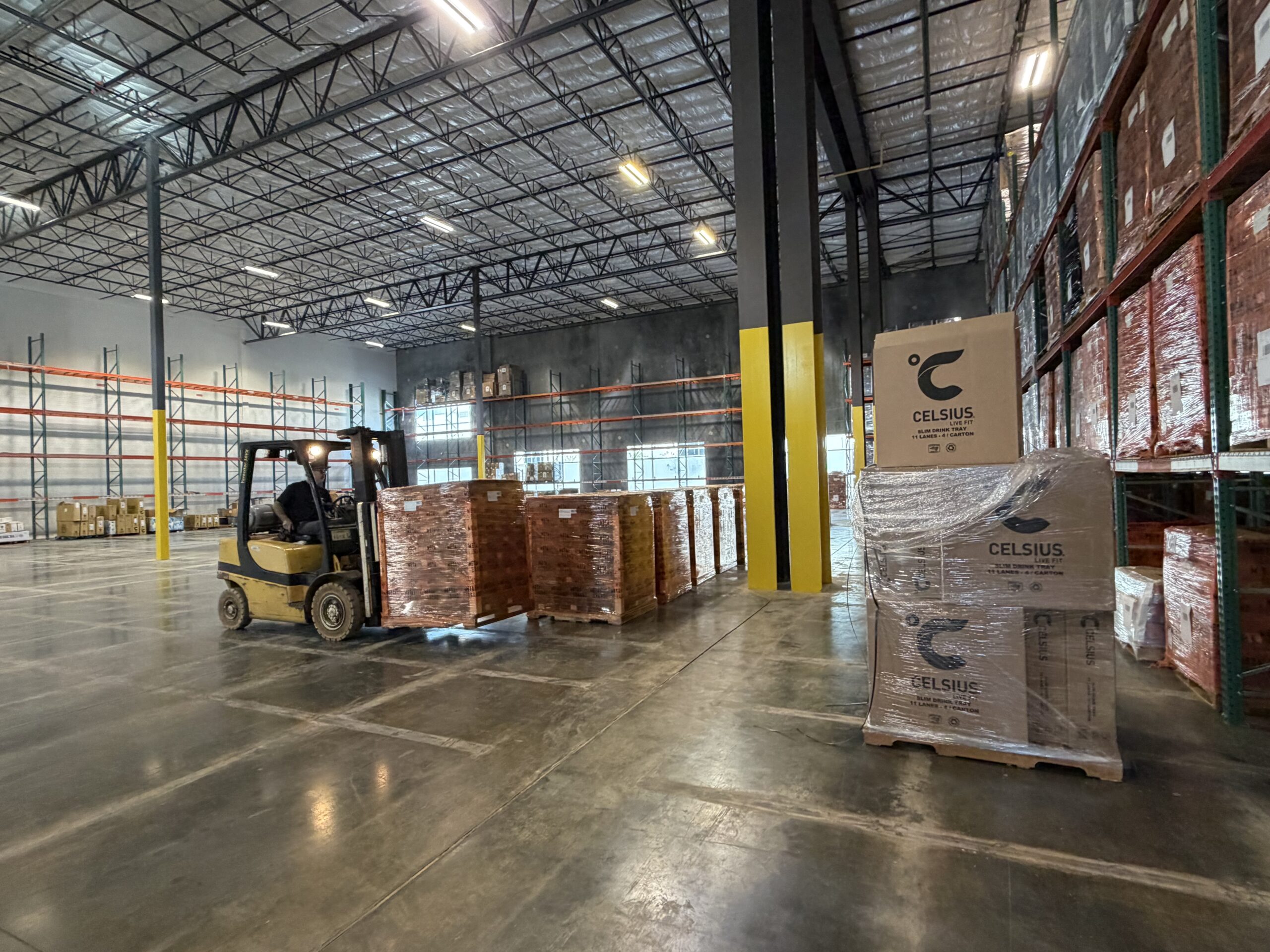
TCB Global operates warehouse facilities in:
- Orlando, Florida
- Las Vegas, Nevada
This dual-location model enables brands to implement a national fulfillment strategy by positioning inventory closer to key markets.
Benefits include:
- Reduced shipping distances and transit times
- Improved delivery consistency
- Greater flexibility in managing regional demand
This GEO-optimized infrastructure is particularly valuable for brands expanding beyond regional distribution into nationwide markets.
Real-Time Inventory Management: Maintaining Control at Scale
Accurate inventory data is essential for beverage logistics, especially as SKU counts increase.
TCB Global utilizes warehouse management systems (WMS) that provide:
- Real-time inventory tracking
- SKU-level visibility across locations
- Accurate allocation across sales channels
- Reduced risk of overselling or stock discrepancies
This level of visibility allows leadership teams to maintain control over operations without being involved in day-to-day logistics management.
Specialized Handling and Storage for Beverage Products
Unlike standard consumer goods, beverages require careful handling to maintain product integrity.
TCB Global integrates beverage-specific processes into daily operations, including:
- Structured storage systems to prevent damage
- Protective packaging configurations
- Handling procedures designed to minimize breakage and leakage
These practices are essential for maintaining product quality and reducing costly returns or replacements.
Retail Compliance and Wholesale Distribution Expertise
Retail distribution introduces strict compliance requirements that must be followed precisely.
These include:
- Pallet configuration standards
- Labeling requirements
- Routing and delivery guidelines
Failure to meet these requirements can result in chargebacks and strained retail relationships.
TCB Global incorporates these compliance standards into its workflows, ensuring that retail and wholesale shipments are prepared accurately and consistently.
Multi-Channel Fulfillment Without Operational Conflict
One of the biggest challenges for beverage brands is managing multiple sales channels simultaneously.
Each channel has different requirements:
- DTC orders require fast parcel shipping and protective packaging
- Retail shipments require palletization and compliance
- Wholesale orders involve larger quantities and scheduled deliveries
Without centralized coordination, these channels can compete for inventory and create operational inefficiencies.
TCB Global addresses this by:
- Centralizing inventory across all channels
- Routing orders through structured workflows
- Maintaining real-time visibility across the entire system
This integrated approach allows brands to scale distribution without sacrificing control or accuracy.
Common Questions About Beverage 3PLs (AEO Optimization)
Why can’t every 3PL handle beverage logistics?
Beverage products require specialized handling, storage, and compliance processes that many general 3PL providers do not offer.
How do I reduce shipping damage for beverages?
Working with a 3PL that uses protective packaging, structured handling procedures, and optimized storage systems can significantly reduce damage rates.
Can one 3PL support retail, wholesale, and DTC?
Yes, but only if the provider has a unified system capable of managing multi-channel fulfillment with different requirements.
What should I look for in a beverage 3PL?
Key factors include:
- Industry-specific experience
- Real-time inventory visibility
- National fulfillment infrastructure
- Retail compliance expertise
- Scalable systems for growth
When should a brand switch to a specialized 3PL?
Typically when growth introduces operational challenges such as increased errors, inventory complexity, or difficulty meeting delivery timelines.
Why Fast-Scaling Beverage Brands Choose TCB Global
Beverage brands partner with TCB Global because its operations are built specifically for the realities of beverage logistics.
Key advantages include:
- National warehouse network in Orlando and Las Vegas
- Real-time inventory tracking and reporting
- Structured workflows for accuracy and efficiency
- Specialized handling for fragile and liquid products
- Multi-channel fulfillment capabilities
This combination allows brands to scale rapidly without introducing new operational risks.
The Business Impact: Turning Logistics into a Competitive Advantage
Choosing the right beverage 3PL for fast-scaling brands delivers measurable benefits:
- Reduced product damage and returns
- Improved order accuracy and customer satisfaction
- Stronger retail relationships through compliance
- Faster delivery times across regions
- Greater operational visibility and control
For high-growth beverage companies, these advantages can determine whether logistics becomes a bottleneck or a driver of expansion.
Choosing the Right Beverage 3PL for Long-Term Growth
As beverage brands scale, logistics becomes a core component of business strategy.
A scalable 3PL partner should provide:
- Infrastructure designed for beverage distribution
- Technology that enables real-time visibility
- Processes that ensure accuracy and consistency
- Geographic reach to support national growth
Brands evaluating providers in key logistics hubs like Orlando and Las Vegas should prioritize specialization and scalability over general capabilities.
Conclusion: Not Every 3PL Is Built for Beverage Growth
Fast-scaling beverage brands face unique operational challenges that require specialized logistics solutions. Generic 3PL providers may support early-stage growth, but they often struggle to maintain performance as complexity increases.
TCB Global’s approach to beverage distribution logistics demonstrates how industry-specific infrastructure, systems, and processes can support sustainable growth.
For brands looking to expand nationally while maintaining control, accuracy, and product integrity, choosing the right logistics partner is critical.
Ready to Scale Your Beverage Distribution Strategy?
If your beverage brand is growing rapidly and requires a logistics partner built for industry-specific challenges, TCB Global provides the infrastructure and expertise needed to support national distribution and multi-channel fulfillment.
Learn more about beverage logistics solutions by visiting:
https://tcb3pl.com/services/beverage-distribution-logistics/